
0%

Why Choose 20-Foot Shipping Containers?

Every container decision begins with a practical question: what must move, and where will it go? According to UNCTAD’s Review of Maritime Transport 2024, shipping carries more than 80% of global merchandise trade by volume. Within this system, 20-foot shipping containers remain a dependable choice for dense, heavy cargo. Their typical internal capacity is about 33 cubic metres, while the maximum gross weight often reaches 30,480 kilograms. Exact limits vary by container design, carrier rules, and road regulations.

Lars Jensen, founder of Vespucci Maritime and a respected container-shipping analyst, has repeatedly stressed that “capacity is not the same as availability.” That distinction matters. A container may exist in a global fleet, yet remain unavailable near your factory, port, or warehouse. A 20-foot unit can reduce wasted space when cargo is heavy, compact, or palletized. Steel coils, machinery parts, canned goods, and industrial equipment often fit this profile. It can also simplify handling at smaller terminals and inland depots.

The choice is not automatically better. It can be inefficient for light, bulky cargo. Freight rates, repositioning costs, chassis availability, and local axle limits may change the calculation. Drewry and UNCTAD data both show how quickly equipment supply and shipping conditions can shift. That is easy to underestimate.

A strong decision combines cargo measurements, verified payload requirements, route planning, and current market quotes. Measure twice. Then challenge the obvious answer.
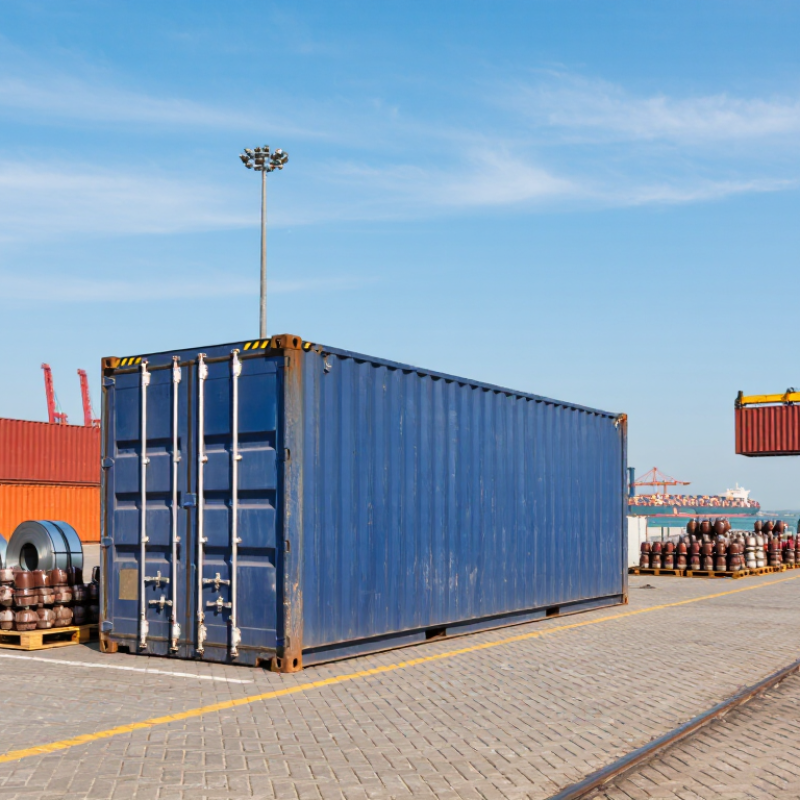
Why Choose 20-Foot Shipping Containers?

What Is a 20-Foot Shipping Container?

Why Choose 20-Foot Shipping Containers?

What Is a 20-Foot Shipping Container?

A 20-foot shipping container is a steel cargo box built for secure transport and practical storage. Its standard external dimensions are about 20 feet long, 8 feet wide, and 8 feet 6 inches high. Internal space is usually close to 19 feet 4 inches long, 7 feet 8 inches wide, and 7 feet 10 inches high.

It holds roughly 33 cubic meters, although usable space is lower after adding packaging, pallets, or shelving. A typical unit weighs around 2,200 to 2,400 kilograms when empty. Maximum payload depends on its construction, condition, and local transport limits. Checking the door plate is essential.

The corrugated steel walls resist rain, wind, and repeated handling. Corner posts support lifting equipment, while locking bars secure the double doors. Many units include a timber floor, but moisture can still cause problems without ventilation. I have seen stored materials suffer from condensation, even when the container looked completely sealed.

A 20-foot container suits tools, machinery, seasonal goods, and compact site storage. It is easier to place than a 40-foot unit and often works with smaller access roads. Still, it is not automatically the right choice. Measure the entrance, turning area, ground strength, and internal load before arranging delivery. A small mistake can become an expensive one.

What Are the Standard Dimensions and Features?

Why Choose 20-Foot Shipping Containers?

What Are the Standard Dimensions and Features?

A standard 20-foot shipping container measures about 20 feet long, 8 feet wide, and 8 feet 6 inches high externally. Its internal space is usually close to 19 feet 4 inches long, 7 feet 8 inches wide, and 7 feet 10 inches high. Small differences are common.

The cargo volume is roughly 33 cubic meters, although usable capacity depends on packaging and wall thickness. The rear doors normally provide an opening near 7 feet 8 inches wide and 7 feet 5 inches high. This suits pallets, boxed equipment, tools, and many household items. Check every measurement before delivery.

Most units use weather-resistant steel walls, reinforced corner posts, locking bars, and a marine-grade plywood floor. Vents reduce condensation, but they do not remove moisture completely. Door seals should sit evenly without cracks. Rust around the lower rails deserves careful inspection.

A 20-foot container is easier to position than a longer unit. It also offers a practical balance between storage capacity and transport weight. In real inspections, the floor condition can matter more than fresh paint. A clean exterior may hide damp flooring or repaired panels. Specifications can vary with age, construction, and previous use, so measured verification remains necessary.

What Are the Main Advantages of 20-Foot Containers?

A 20-foot shipping container offers practical control over space, weight, and handling. Its standard internal volume is about 33 cubic metres, while allowable payload often approaches 28,000 kilograms. Actual limits depend on tare weight, container condition, and local transport rules. The 20-foot format also equals one TEU, the basic unit used in global shipping statistics. UNCTAD’s Review of Maritime Transport 2024 reported about 12.3 billion tonnes of seaborne trade in 2023, showing why standardised container measurements remain essential.

The main advantage is balance. A 20-foot container suits dense cargo, machinery, packaged materials, and smaller inventories. It uses less space than a 40-foot unit, which can reduce unused capacity and storage pressure. It is also easier to position in restricted yards or urban delivery areas. However, this format is not automatically cheaper. Heavy cargo may reach the weight limit before the volume is filled. That detail is often overlooked.

Tips: Check the CSC safety plate before loading. Compare payload, internal dimensions, and route restrictions. Leave clearance around doors and distribute weight across the floor. Industry reports provide useful averages, but real conditions vary. Moisture, uneven floors, and loading mistakes still matter. A careful inspection may prevent expensive delays.

Why Choose 20-Foot Shipping Containers?

A 20-foot standard dry container offers a practical balance of capacity, payload, handling efficiency, and space utilization. It is well suited to smaller shipments, dense cargo, and locations where maneuverability is important.

Typical ISO dry-container specifications show that a 20-foot container provides approximately 33.2 m³ of internal volume and can carry about 28.2 metric tonnes of payload. Compared with a 40-foot container, it offers a smaller minimum shipment commitment, easier access to constrained sites, and stronger payload efficiency for dense goods. Actual specifications may vary by container design and operating regulations.

How Are 20-Foot Containers Commonly Used?

A 20-foot shipping container is often used as a practical, secure storage space. Its compact footprint fits construction sites, farms, workshops, and small business locations. A standard unit provides enough room for tools, boxed inventory, building materials, or seasonal equipment.

On a construction site, workers may store power tools, protective gear, pipes, and spare supplies inside. Shelving keeps smaller items off the floor, while a lockable door helps control access. Containers also serve as temporary workshops, though lighting, ventilation, and electrical work should be planned by qualified professionals. Poor airflow can create condensation and damage stored materials.

Small retailers sometimes convert these units into pop-up stores or collection points. With insulation, flooring, windows, and approved electrical systems, the space can become more comfortable for daily use. Farmers may use one for feed, irrigation equipment, or harvested goods that need dry storage. Temperature-sensitive products require additional controls, not simple assumptions.

In practice, plans are rarely perfect. A container can feel larger online than it does after shelving is installed. Measure every item, including door clearance and forklift access. Check the floor, roof, seals, and locking bars before placement. Local rules may also govern foundations, fire safety, drainage, and permitted use. A level base matters. It reduces door problems and helps protect the structure during long-term use.

Why Choose 20-Foot Shipping Containers? - How Are 20-Foot Containers Commonly Used?

Data Dimension Typical Specification or Use Practical Benefit
Standard External Dimensions Approximately 6.06 m long × 2.44 m wide × 2.59 m high (20 ft × 8 ft × 8 ft 6 in). The compact footprint fits common road, rail, port, and warehouse handling systems while providing useful cargo capacity.
Typical Internal Dimensions Approximately 5.90 m long × 2.35 m wide × 2.39 m high. Exact dimensions vary by container design and manufacturer. Useful for estimating whether pallets, machinery, furniture, or boxed goods will fit before loading.
Internal Cubic Capacity Approximately 33.1–33.2 m³, or about 1,170–1,172 cubic feet. Provides substantial space for general cargo while remaining easier to fill efficiently than a larger 40-foot unit for smaller shipments.
Typical Door Opening Approximately 2.34 m wide × 2.28 m high, or about 7 ft 8 in × 7 ft 5 in. Allows access for many palletized loads, forklifts, carts, and large individual items; cargo dimensions should be checked before loading.
Maximum Gross Weight Common ISO-rated maximum: up to 30,480 kg, including the container and its cargo. The rating shown on the container takes priority. Supports heavy cargo, but road, rail, bridge, and local weight restrictions may reduce the legally permitted payload.
Typical Tare Weight Approximately 2,200–2,400 kg for a standard steel container, depending on construction, fittings, and equipment. A lower tare weight generally leaves more of the permitted gross weight available for cargo.
Approximate Payload Often around 28,000 kg, calculated as maximum gross weight minus tare weight; the exact figure varies by unit. Suitable for dense cargo such as metal products, machinery, building materials, and packaged industrial goods, subject to transport regulations.
Floor Area Approximately 13.9 m², or about 149.7 square feet. Provides a practical enclosed area for storage, workshop layouts, equipment protection, or temporary site facilities.
General Cargo Shipping Commonly used for packaged goods, cartons, pallets, spare parts, furniture, textiles, and non-temperature-controlled products. Offers standardized handling, weather protection, and compatibility with intermodal transport.
Small and Medium Shipments Often selected when the shipment does not require the full volume of a 40-foot container or when cargo weight is the main consideration. Can reduce unused space and simplify loading, unloading, inventory control, and inland delivery planning.
On-Site Storage Used for tools, construction materials, maintenance supplies, seasonal inventory, and emergency stock. Creates a lockable, weather-resistant storage room without permanent construction.
Construction and Industrial Sites Adapted for equipment storage, secure material staging, mobile workshops, and temporary site offices when properly modified. Its steel structure and lifting points support relocation between project sites using suitable handling equipment.
Retail, Events, and Temporary Facilities Converted into pop-up shops, ticket booths, exhibition spaces, bars, kitchens, or event storage areas. Provides a modular enclosure that can be transported and reused, although modifications require appropriate structural, electrical, and safety compliance.
Space Planning Efficiency The standardized external width and length allow units to be stacked or arranged in repeatable layouts. Supports predictable planning for depots, warehouses, temporary campuses, and modular facilities.
Loading and Weight Distribution Cargo should be evenly distributed, secured against movement, and kept within the container’s rated limits and applicable transport rules. Proper loading helps protect the cargo, reduces handling risks, and improves vehicle and container stability.
Important Selection Check Confirm the container’s CSC plate, maximum gross weight, tare weight, door dimensions, floor condition, and inspection status before use. Individual specifications vary, so checking the actual unit prevents capacity, compliance, and compatibility problems.
Dimensions and capacities are typical values for standard 20-foot dry freight containers. Actual specifications may vary by container design, age, structural modifications, and applicable transport regulations.

What Factors Should You Consider Before Choosing One?

Why Choose 20-Foot Shipping Containers?

A 20-foot container suits compact, heavy, or regularly shaped cargo. Its typical internal volume is about 33 cubic meters, while its maximum gross mass is commonly 30,480 kilograms under ISO specifications. The usable payload is lower after subtracting tare weight. Always check the container plate.

UNCTAD’s Review of Maritime Transport reports that over 80% of global merchandise trade moves by sea. This scale explains why standard dimensions matter. A 20-foot unit transfers easily between ships, rail wagons, and trucks. However, transport rules differ by country. Road axle limits may restrict the cargo before the container reaches its rated capacity. A small mistake here becomes an expensive delay.

Consider your cargo dimensions, pallet layout, loading equipment, and delivery route. Heavy machinery may fit well, but awkward shapes can waste floor space. Inspect the floor, door seals, corner posts, and roof for damage. For used units, confirm the CSC safety plate remains valid. A “wind and watertight” description is helpful, but it is not a full condition report.

Tips: Measure every item, including packaging. Leave clearance around doors and roof fittings. Compare the total delivered cost, not only the rental price. Ask for tare weight, payload, inspection date, and external dimensions in writing. I have seen plans fail because a forklift could not enter the chosen site. The container was suitable. The access was not.

FAQS

What are the standard external dimensions of a 20-foot shipping container?

It is about 20 feet long, 8 feet wide, and 8 feet 6 inches high. Small differences are normal.

How much internal space does a standard container provide?

Internal space is usually about 19 feet 4 inches long, 7 feet 8 inches wide, and 7 feet 10 inches high. Measure it anyway.

What is the approximate cargo volume?

The volume is roughly 33 cubic meters. Packaging, wall thickness, and floor space can reduce usable capacity.

What can fit through the rear doors?

The opening is usually near 7 feet 8 inches wide and 7 feet 5 inches high. Pallets, tools, boxes, and household goods often fit.

What features should buyers inspect carefully?

Check steel walls, corner posts, locking bars, floor panels, vents, and door seals. Look closely at rust near the lower rails.

Does a clean exterior mean the container is in good condition?

Not always. Fresh paint can hide damp flooring, repaired panels, or uneven surfaces. The floor may matter more than appearance.

How much weight can a 20-foot container carry?

Allowable payload may approach 28,000 kilograms. Actual limits depend on tare weight, condition, and local transport rules.

Why can a 20-foot container suit dense cargo?

It balances space, weight, and handling. Heavy machinery or packaged materials may reach the weight limit before filling the volume.

Is a 20-foot container easy to position?

Usually, yes. Its shorter length suits restricted yards, urban delivery areas, and smaller storage locations.

What should be checked before loading?

Review the safety plate, payload, dimensions, and route restrictions. Leave door clearance and spread weight evenly across the floor. Mistakes still happen.

Conclusion

A 20-foot shipping container is a standardized steel unit designed to protect and transport goods efficiently by road, rail, or sea. Its compact size, durable construction, secure doors, and weather-resistant structure make it suitable for many logistical and storage needs. Compared with larger container options, it offers a practical balance between usable capacity, handling convenience, and transportation cost.

The main advantages of 20-foot shipping containers include easy maneuverability, broad compatibility with transport equipment, strong protection from weather, and flexible placement in limited spaces. They are commonly used for cargo transport, temporary storage, construction-site equipment, workshops, and customized spaces. Before choosing one, consider the container’s internal dimensions, payload capacity, condition, ventilation, insulation requirements, delivery access, security features, and local placement regulations. Careful evaluation helps ensure that the container matches the intended goods, location, budget, and duration of use.

Eleanor

Eleanor

Eleanor is a highly experienced marketing professional dedicated to helping businesses understand practical, reliable, and innovative product solutions. With a strong knowledge of the company’s services, product features, and customer needs, she creates clear and valuable content that connects......