Standardized, CSC-certified, and custom engineered insulated solutions engineered for global commercial, industrial, and workforce applications.
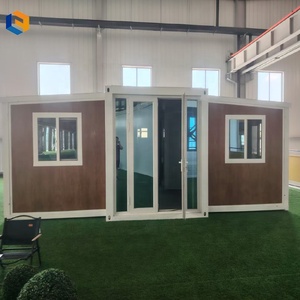
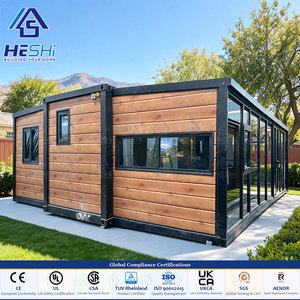
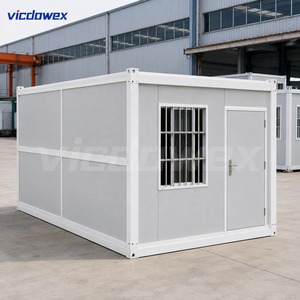
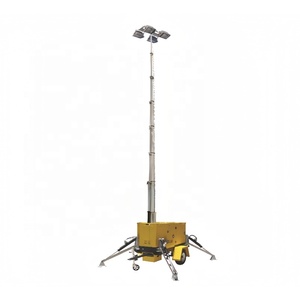
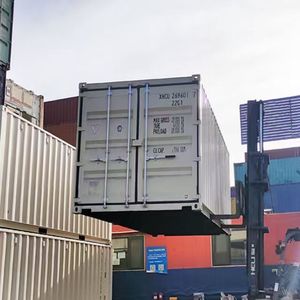
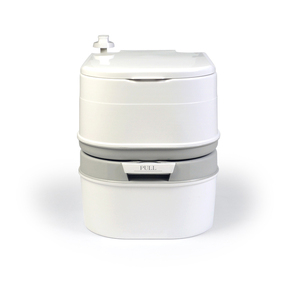
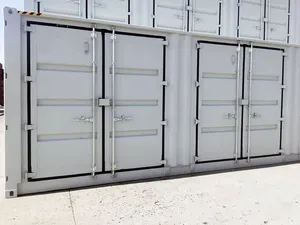
The global demand for high-performance insulated shipping containers has shifted substantially from traditional passive cold storage into sophisticated thermal architectures. Today's industrial procurement officers, municipal disaster planners, and modular builders demand strict compliance with international thermal efficiency standards, structural rigidity mandates, and low-GWP (Global Warming Potential) environmental directives. An insulated container is not merely an empty steel enclosure lined with polyurethane boards; it is a meticulously engineered thermodynamic system designed to preserve strict internal climates across ambient operating spans ranging from -40°C in subarctic environments to +55°C under tropical maritime conditions.
In top-tier Chinese manufacturing facilities, the structural base begins with cold-rolled Corten-A or SPA-H atmospheric anti-corrosion structural steel. The primary structural rails, corner castings, and corrugations withstand compressive stacking loads exceeding 192,000 kg (in compliance with ISO 1496-1 conventions). However, introducing thermal insulation inside this metallic envelope creates intense thermal bridging challenges. Steel exhibits a high thermal conductivity (λ ≈ 50 W/m·K). Without precise non-conductive breaks, structural thermal bridges cause condensation, dew point migration, mold proliferation, and energy loss.
Advanced factories employ robotic continuous high-pressure injection molding for rigid Polyisocyanurate (PIR) and Polyurethane (PUR) cores, yielding a microscopic closed-cell density between 40 kg/m³ and 45 kg/m³ with a core thermal conductivity lower than 0.021 W/m·K. For stringent architectural and commercial modular builds, structural composite insulated panels (SIPs) reinforced with non-combustible A1-grade stone mineral wool or integrated Vacuum Insulation Panels (VIPs) are deployed. VIP panels provide an ultra-low thermal conductivity (λ ≤ 0.004 W/m·K), allowing the container envelope to achieve thermal ratings up to R-48 without sacrificing valuable interior clearance.
| Insulation Core Material | Density (ρ) | Thermal Conductivity (λ) | Fire Classification | Moisture Absorption | Primary Industrial Use-Case |
|---|---|---|---|---|---|
| High-Pressure PIR (Polyisocyanurate) | 40 – 45 kg/m³ | 0.020 – 0.022 W/m·K | EN 13501-1 B-s1, d0 / Class 1 | < 1.0% by volume | ISO Reefer Boxes, Cold Storage, Luxury Modular Homes |
| Hydrophobic Rockwool (Mineral) | 100 – 140 kg/m³ | 0.035 – 0.040 W/m·K | EN 13501-1 Class A1 (Non-combustible) | < 0.5% (Hydrophobic treated) | Hazardous Material Storage, Off-shore Camps, Fire-rated ADUs |
| Extruded Polystyrene (XPS) | 32 – 38 kg/m³ | 0.028 – 0.032 W/m·K | DIN 4102 B1 / B2 | < 0.7% by volume | Standard Prefab Offices, Worker Dormitories, Mobile Restrooms |
| Vacuum Insulation Panels (VIP Hybrid) | 180 – 220 kg/m³ | 0.004 – 0.006 W/m·K | Composite dependent | Zero vapor permeability | Biomedical Transport, Extreme Arctic/Desert Mission Modules |
| Aerogel Thermal Blanket Composite | 150 – 180 kg/m³ | 0.015 – 0.018 W/m·K | ASTM E84 Class A | Fully Hydrophobic | Retrofit Interior Insulation with Minimum Space Penalty |
The mechanical construction of the interior lining is equally decisive. In food-grade and pharmaceutical-grade cold chain applications, manufacturers apply high-yield 304/316 marine-grade stainless steel or food-grade reinforced glass fiber reinforced polymer (FRP) with antimicrobial gel coats. For residential and commercial workspaces, fireproof calcium silicate board or high-density magnesium oxide (MGO) substrate boards serve as the drywall equivalent, delivering an impact-resistant, paintable, and flame-retardant interior perimeter.
Strategic structural shifts shaping how global engineering contractors and logistics firms source insulated containers from China.
Global import benchmarks (such as the EU's Carbon Border Adjustment Mechanism - CBAM) are compelling Chinese foundries to integrate green-recycled steel and zero-ODP, ultra-low GWP blowing agents (e.g., Cyclopentane or HFO fourth-generation foaming technologies). Procurement frameworks increasingly mandate environmental product declarations (EPDs) demonstrating cradle-to-gate carbon tracking across the container's production cycle.
Procuring raw insulated boxes without digital sensory integration is quickly becoming obsolete. Top Chinese exporters now integrate IoT-enabled interior atmospheric probes, door-seal contact micro-switches, and automated humidity/dew-point monitoring units natively into the insulated cavity. These self-powered modules transmit telemetry over global NB-IoT / satellite networks, allowing real-time thermal validation throughout multimodal ocean and rail transit.
Procurement teams are cutting expensive on-site field labor by commissioning turnkey modular configurations directly at the source. This includes pre-installed MEP (Mechanical, Electrical, and Plumbing) conduits compliant with UL/CSA, AS/NZS, or CE regulations. Restroom containers, modular clinical wards, and field offices arrive on-site pre-plumbed, pressure-tested, and insulated, reducing downstream commissioning schedules by over 60%.
The ongoing technological convergence in Chinese industrial container fabrication centers on eliminating microscopic heat transfer pathways and optimizing strength-to-weight ratios. In conventional container modification, cutting corrugated steel sidewalls reduces structural load-bearing capacity by up to 45%. Tier-1 suppliers counteract this structural compromise by installing heavy-gauge peripheral rectangular hollow sections (RHS) alongside FEA (Finite Element Analysis) simulated framing before introducing the thermal barrier.
On the thermal performance frontier, **Phase Change Materials (PCMs)** are gaining widespread adoption. Embedded between the PIR insulation core and the interior substrate, inorganic salt hydrate PCMs absorb peak thermal flux during intense diurnal cycles (35°C to 45°C sunlight exposure) and release stored latent heat during freezing nocturnal phases. This passive thermal inertia reduces HVAC electrical loads by up to 32% in off-grid modular housing, tactical command shelters, and field hospital applications.
Simultaneously, door perimeter engineering has evolved significantly. Traditional EPDM gaskets degrade under UV radiation, producing thermal leakage at the container's rear leaf doors. Contemporary designs feature double-extruded Santoprene TPV or multi-fin silicone perimeter seals containing magnetic locking cores. This guarantees an airtight enclosure (in accordance with ISO 1496-2 air leakage standards: ≤ 5 m³/h at 250 Pa internal pressure), preventing moist air infiltration and subsequent frost buildup inside low-temperature enclosures.
Operating dedicated production floors with integrated engineering, automated fabrication, and rigorous quality inspection under one roof.
No intermediaries, brokers, or subcontracted assembly. We control structural steel shearing, robotic plasma cutting, corrugation stamping, automated foaming, and electrical wiring within our own certified plants.
Every batch undergoes non-destructive weld testing (NDT), structural diagonal squareness checks, thermal imaging leakage analysis, and high-pressure water tightness spray tests under ISO 1496 standards.
All containers and modular components hold CSC (Container Safety Convention) certifications issued by international classification societies (BV, DNV, ABS, or CCS), ensuring unhindered multimodal ocean transport.
Our engineering division translates complex engineering briefs into fully finished units: pre-plumbed ADA restrooms, off-grid solar-integrated homes, sound-damped generator housings, or multi-family expandable dwellings.
We maintain an active stockpile of heavy-duty SPA-H Corten steel plates, standard 20GP/40HC cargo containers, and pre-insulated sandwich panels to support fast turnarounds and surge procurement orders.
Strategically positioned near major Chinese deepwater container ports (Shanghai, Qingdao, Ningbo, Shenzhen) for streamlined FOB, CIF, or DDP shipping with preferential ocean freight contracts.
Direct technical answers addressing engineering standards, import logistics, certifications, and thermal performance parameters.