Integrated Sink
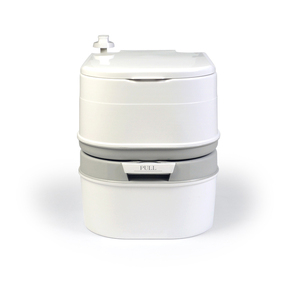
In modern infrastructure expansion, civil contracting, remote mining operations, and sustainable urban parks, conventional stick-built sanitation is hindered by extended construction schedules, permitting bottlenecks, and severe geographic constraints. Mobile toilet containers engineered by China's leading specialized manufacturers deliver factory-certified, pre-plumbed, and structurally insulated modular sanitation units that satisfy international building, plumbing, and accessibility standards (including UPC, WaterMark, CE, and ADA compliance).
Explore our certified portfolio of heavy-duty ISO shipping container restrooms, trailer-mounted mobile sanitation cabins, and lightweight modular sandwich panel WC units.
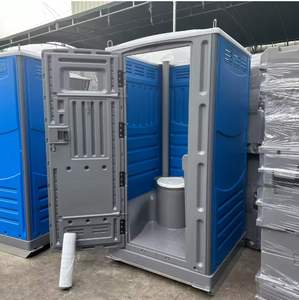
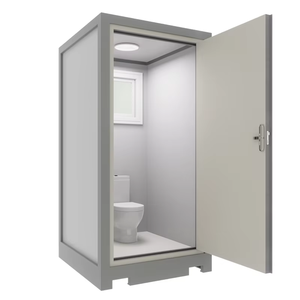
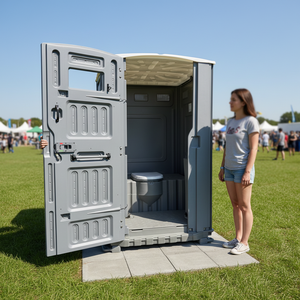
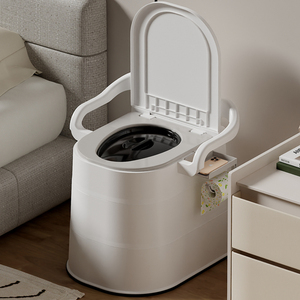
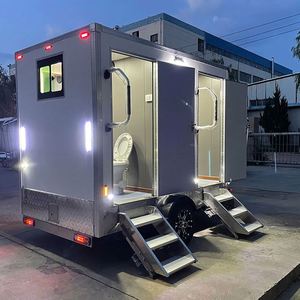
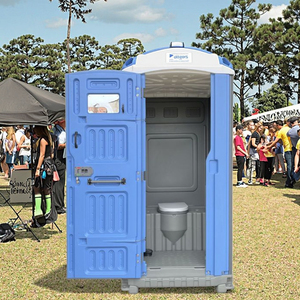
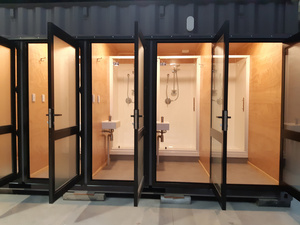
Unlike trading intermediaries or brokers, our production lines consolidate cold-formed structural steel fabrication, robotic CNC cutting, automated sandwich panel foaming, and certified MEP (mechanical, electrical, plumbing) installations under one accountable roof.
From initial uncoiling of Corten-A weathering steel to five-stage anti-corrosion marine epoxy coatings, structural framing and interior finishes are managed in-house. This eliminates third-party markups and guarantees stringent adherence to fabrication tolerances under ±1.5mm.
Every commercial toilet container unit is engineered according to target market plumbing codes—conforming with UPC/cUPC (North America), WaterMark (Australia/NZ), and CE EN 12050 standards. Electrical wiring is routed in flame-retardant conduits with UL/CE/SAA circuit protection.
Units are 100% pre-commissioned, pressure-tested for water tightness at 0.6 MPa, and energized before crating. On arrival, your site team merely secures the modular ISO corners and ties into external mains water, sewer, and electric supply or off-grid storage tanks.
Interior bulkheads feature 304/316 grade stainless steel fixtures, tamper-proof hardware, diamond-plate aluminum or seamlessly hot-welded anti-slip medical-grade vinyl flooring with integrated floor drains for rapid high-pressure washdown and hygiene maintenance.
Our containerized restrooms can be manufactured directly as CSC-certified Shipper Owned Containers (SOC) that load standard ocean freight vessels without requiring out-of-gauge breakbulk. Alternatively, flat-pack kits allow shipping up to 4 complete cabins per 40HQ slot.
We provide full CAD/BIM shop drawings within 48 hours for tender submissions. Customizations include gender-segregated layouts, ADA-compliant wide door access with grab bars, integrated baby-changing stations, shower-toilet combos, and solar energy microgrids.
Comprehensive architectural matrix detailing dimensions, structural properties, load values, and MEP parameters for engineering procurement managers.
| Specification Parameter | 10ft Compact Sanitary Container | 20ft ISO Heavy-Duty Restroom | 40ft Multi-Stall / Camp Ablution |
|---|---|---|---|
| External Dimensions (L×W×H) | 2,991 × 2,438 × 2,591 / 2,896 mm | 6,058 × 2,438 × 2,591 / 2,896 mm | 12,192 × 2,438 × 2,896 mm (High Cube) |
| Structural Chassis & Steel Shell | 3.0mm Cold-formed Q235B / Corten | ISO Standard Corten-A Weathering Steel | High-Cube Heavy Industrial Marine Corten |
| Wall & Ceiling Insulation Core | 50mm EPS / PU Sandwich (R-14) | 75mm High-Density PIR / Rockwool (R-21) | 100mm PU / Rockwool Fireproof Class A1 |
| Flooring System | 18mm Fiber Cement + 2mm Anti-Slip PVC | 18mm Marine Plywood + 3mm Alum Checker | Epoxy Terrazzo / Welded Medical Vinyl |
| Interior Stall Capacity | 1–2 WCs + 1 Handwash Station | 3–4 WCs + 2 Urinals + 2 Sinks | 6–8 WCs + 4 Urinals + 4 Sinks (+ Showers) |
| Plumbing Rough-In Standard | UPC / WaterMark / CE Certified PPR/PVC | UPC / WaterMark / CE Certified PPR/PVC | Dual-circuit Gray/Black Waste Separation |
| Ventilation & Climate Control | Louvers + IP44 Axial Exhaust Fan | Centrifugal HVAC + Heating System | Split Inverter AC + Central Positive Pressure |
| Tare Weight Range | Approx. 1,800 – 2,200 kg | Approx. 3,600 – 4,400 kg | Approx. 7,200 – 8,800 kg |
The global mobile sanitation sector is moving rapidly beyond temporary plastic cubicles toward permanent-grade, climate-resilient, circular-economy modular infrastructure. Key global market drivers over the 2025–2032 horizon include:
Global procurement teams in mining camps and municipal parks demand automated facility management. Next-generation containers incorporate ultrasonic tank-level sensors, automated freshwater replenishment valves, and IoT door-cycle counters.
Escalating grid-connection costs in remote geographic sectors have accelerated the adoption of self-powered sanitation units equipped with roof-mounted monocrystalline PV arrays and lithium iron phosphate (LiFePO4) energy storage systems.
Water scarcity and high wastewater extraction fees have driven maritime and aircraft vacuum-toilet mechanics into ground-based container restrooms. Operating at 0.5 to 0.8 liters per flush (compared to 6 liters for gravity systems), water consumption is cut by over 85%.
Corporate ESG mandates in North America, Europe, and Australasia are forcing general contractors to select circular structural steel modules over single-use fiberglass and PVC plastics. Steel container structures offer a verified 25+ year design life and 98% end-of-life recyclability.
Deployments in environmentally sensitive national parks, coastal reserves, and water catchments increasingly integrate decentralized Membrane Bioreactor (MBR) systems underneath or adjacent to the container envelope, eliminating external sewage pipelines.
EPC megaprojects (energy transition, hydrogen plants, railway lines) require scalable, relocatable sanitation corridors. Containers are designed with standardized quick-connect cam-lock manifolds, allowing modules to be linked linearly or stacked multi-story.
Essential technical, regulatory, logistical, and commercial inquiries answered by our structural engineering and export compliance team.
Speak directly with our modular engineering specialists to review custom floor plans, load calculations, plumbing conformance matrices, or obtain a comprehensive factory-direct FOB/CIF quotation within 24 hours.