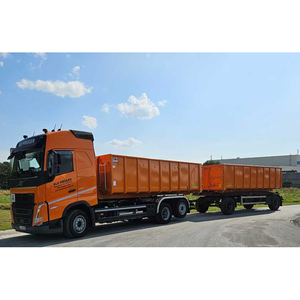
20 M Aluminum Scrap Storage Container
Structural: Reinforced Alloy Frame
Application: Heavy Material & Residue Isolation
Get a Quote

Discover our turn-key engineered enclosures tailored for point-of-care diagnostics, cleanroom assembly, environmental analysis, and heavy-duty field support.

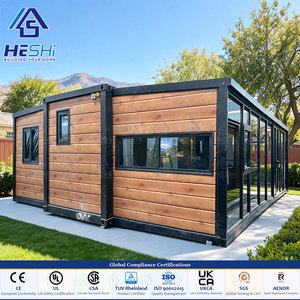


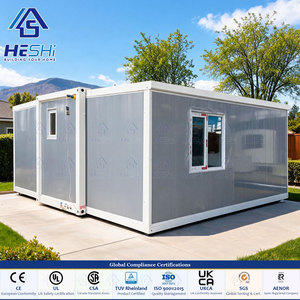

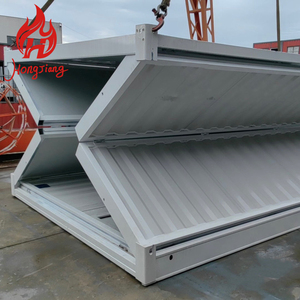
Industrial procurement of modular container laboratories demands strict alignment with complex biocontainment protocols, structural rigidity standards, and cleanroom air handling logistics. Unlike conventional site-built laboratory wings, a prefabricated container laboratory operates as an autonomous, self-contained functional system. Fabricated using high-tensile Corten-A weathering steel shipping container shells (conforming to ISO 1496-1), these units provide the torsional strength necessary to survive multiple relocation cycles via maritime, rail, and flatbed transport without degrading internal micro-tolerances.
Internally, our factory applies pharmaceutical-grade wall systems utilizing non-porous 50mm to 100mm double-faced continuous PIR (Polyisocyanurate) or structural rockwool sandwich panels. These systems provide exceptional thermal insulation values (U-values down to 0.22 W/m²K) alongside class-A fire resistance. All junction corners incorporate R30 interior coved aluminum corner profiles, preventing microscopic particulate accumulation and allowing for total decontamination via gaseous hydrogen peroxide (VHP) or chlorine dioxide fogging.
The mechanical life-support backbone relies on custom-engineered HVAC packages delivering differential pressure zoning (ranging from -30 Pa for Biosafety Level 3 pathogen containment down to +45 Pa for cleanroom pharmaceutical compounding). Incorporating variable frequency drive (VFD) blowers and multi-stage air processing—including primary G4 pre-filters, F8 secondary filtration, and terminal H14 HEPA units (99.995% efficiency down to 0.3 μm)—our modular structures guarantee uncompromised biosafety and operational resilience in harsh climates ranging from -40°C arctic tundras to +55°C equatorial deserts.
Leveraging deep industrial structural design experience and comprehensive in-house fabrication, we bypass trading brokers to ensure end-to-end accountability.
Framing, thermal insulation, electrical harness routing, medical gas manifolds, and sanitary plumbing are pre-installed and pressure-tested under one factory roof before transport.
Laser-cut steel subframes, engineered portal structural reinforcements, and structural header installations preserve full ocean freight stacking capacity even after extensive fenestration cut-outs.
Every unit retains its CSC (Convention for Safe Containers) safety certification plate, allowing seamless intermodal transit across global maritime routes with zero specialized breakbulk penalties.
Units are pre-wired for off-grid hybrid power, integrated solar battery array coupling, greywater recycling, and on-board quiet diesel generator auto-transfer switches (ATS).
The global trajectory of scientific testing, decentralized diagnostic networks, and mineral exploration assay labs has radically shifted modular container adoption. Over the next decade, global procurement strategies are transitioning through significant structural innovations:
Sourcing directly from an integrated Chinese manufacturing hub empowers commercial buyers to optimize procurement budgets by 35% to 50% relative to North American or European modular fabricators, while maintaining direct control over component specification—from Schneider switchgear to Dwyer differential pressure transmitters and Esco laminar flow benches.
Essential guidance for EPC contractors, health ministries, laboratory directors, and industrial procurement agents.
Our design and fabrication cycles can be customized to comply with international biosafety directives including WHO Laboratory Biosafety Manual guidelines (BSL-1, BSL-2, and BSL-3), ISO 14644 cleanroom criteria (Class 5 through Class 8), and regional building electrical codes such as NEC (US), CE/EN (Europe), and AS/NZS (Australasia). Full validation documents (DQ/IQ/OQ) can be provided upon shipment.
We integrate multi-zone dedicated HVAC air handling units equipped with airtight motor-driven control dampers, variable frequency drives, and pressure-independent air valves. Negative pressure cascades (e.g., Antechamber at -15 Pa, Main Lab at -30 Pa) prevent contamination escape, while bio-exhaust streams pass through bag-in/bag-out (BIBO) dual HEPA filtration systems before safe atmospheric discharge.
Yes. Every unit starts with heavy-duty SPA-H Corten weathering steel, blasted to SA 2.5 profile standards. The exterior is primed with high-build zinc-rich epoxy coatings and topped with marine-grade polyurethane finish (total DFT ≥ 120-160 μm). Internal worktops can be specified with solid chemical-resistant epoxy resin, phenolic resin, or 316-grade seamless stainless steel to prevent chemical damage.
Because our modular laboratories conform strictly to standard ISO outer dimensions (20ft, 40ft, or 40ft High Cube), they ship as standard standard cargo on container vessels without requiring expensive flat-rack or breakbulk handling. Once on site, setup requires only a level concrete slab/pier foundation, external mains electrical connection (or generator input), and connection to water supply and collection tanks.
We offer complete turn-key procurement. In addition to internal wall paneling, cleanroom doors, interlocking airlocks, and HVAC/MEP, we can factory-mount Class II Type A2 or B2 Biosafety Cabinets, autoclave sterilizers, pure water purification rigs, eye wash stations, and emergency power backup generators according to your Bill of Quantities (BOQ).
Consult with our engineering team today to review structural drawings, biosafety airflow requirements, floor plans, and factory production lead times.
Get a Quote