Explore our heavy-duty intermodal structures, converted utility enclosures, modular field camps, and equipment housings engineered for global maritime and intermodal deployments.

Direct from our manufacturing facility, we integrate structural structural engineering with custom manufacturing to meet stringent international standards.
Every dry cargo shell is constructed with atmospheric-corrosion-resistant SPA-H Corten steel plates. Designed to withstand salt fog, extreme thermal fluctuations, and heavy mechanical stresses during intermodal transport.
Our OEM manufacturing lines comply fully with ISO standard freight container criteria. Each unit can be issued an individual CSC plate, qualifying it for international vessel stowage, rail double-stacking, and multi-tier yard piling.
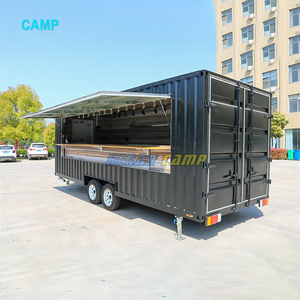
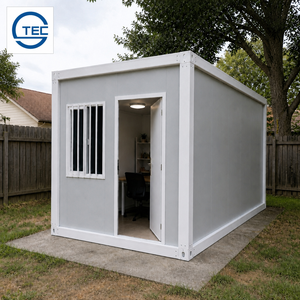
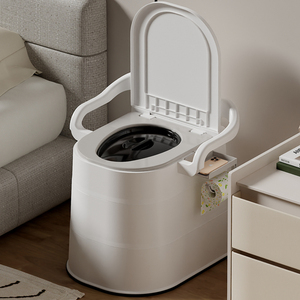
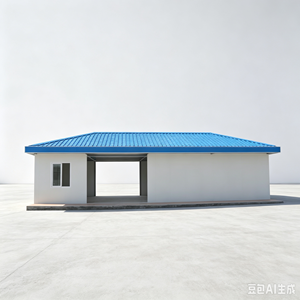
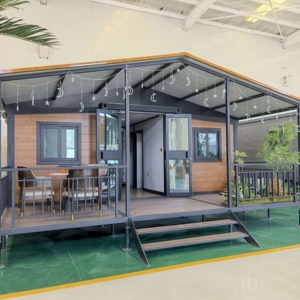
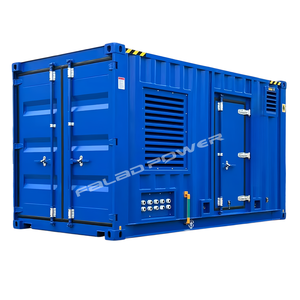
Beyond standard dry freight, we provide direct structural modification for industrial gensets, commercial modular restrooms, battery energy storage systems (BESS), and prefabricated workforce camps.
In global supply chains and heavy modular infrastructure, dry cargo containers serve as foundational mechanical building blocks. As an engineering-driven OEM manufacturer and exporter, our production floor prioritizes metallurgy that outlasts standard atmospheric limits. Standard freight boxes suffer premature oxidization and joint fatigue when exposed to cyclic oceanic environments. Our ISO-spec containers employ continuous submerged arc welding (SAW) on corner-post-to-rail assemblies and high-yield SPA-H Corten steel throughout the corrugation profiles.
For modular conversion programs—such as generator containers, field offices, and industrial accommodation—retaining the structural integrity of the monocoque steel envelope is vital. When openings are cut into corrugated sidewalls, structural load paths must be redirected through reinforced hollow structural sections (HSS) and heavy-gauge box tubing. This process prevents container sagging, ensuring that shipping containers modified for off-grid operations maintain CSC certification for standard maritime transport.
| Dimensional / Physical Property | 20ft ISO Standard Dry Container | 40ft High Cube (HC) Container | Custom OEM Modified Enclosure |
|---|---|---|---|
| External Dimensions (L × W × H) | 6,058 × 2,438 × 2,591 mm | 12,192 × 2,438 × 2,896 mm | Customized to client MEP footprint |
| Internal Clear Dimensions | 5,898 × 2,352 × 2,393 mm | 12,032 × 2,352 × 2,698 mm | Configured with interior insulation offsets |
| Maximum Gross Mass (MGM) | 30,480 kg (67,200 lbs) | 32,500 kg (71,650 lbs) | Engineered per payload profile |
| Tare Weight (Standard) | ~2,200 kg (4,850 lbs) | ~3,900 kg (8,598 lbs) | Variable based on MEP / steel payload |
| Wall / Roof Steel Material | 1.6mm / 2.0mm SPA-H Corten | 1.6mm / 2.0mm SPA-H Corten | Reinforced 2.0mm - 3.0mm structural Corten |
| Base Flooring Medium | 28mm Marine Plywood (T-Floor) | 28mm Marine Plywood (T-Floor) | Diamond Steel Plate / Epoxy Phenolic |
Our Butler, Missouri engineering principles—derived from over a decade of modular residential and industrial prefabrication—combine high-level structural welding with architectural interior finish-outs. This turnkey integration guarantees that whether a client purchases a fleet of standardized dry freight containers or complex, multi-unit worker camps with internal plumbing, each system is delivered ready for immediate deployment.
Procurement directors and commercial developers must account for structural shifts in decarbonization, modular electrification, and regional compliance standards.
Global logistics buyers are prioritizing manufacturers utilizing recycled scrap in electric arc furnaces (EAF), requiring Environmental Product Declarations (EPD) to satisfy corporate Scope 3 emission targets.
Demand is shifting rapidly toward containerized Battery Energy Storage Systems (BESS), solar inverter stations, and mobile microgrid housings engineered with internal fire-rated compartmentalization.
Escalating on-site labor rates drive buyers to procure fully finished modular systems. Containers now leave the factory with pre-tested HVAC, automated controls, and pre-plumbed sanitary assemblies.
Advanced tracking requires OEM integration of IoT monitoring brackets, RFID tracking nodes, and digital strain-gauge sensors directly into the container understructure prior to global departure.
The global shipping container ecosystem is undergoing rapid technical evolution. Historically viewed as inert steel packaging, the modern dry cargo container is evolving into a standardized platform for advanced technology and off-site construction (OSC). Several technical breakthroughs drive this shift:
Automated Robotic Laser-Welding Lines: Precision production eliminates the micro-porosity issues associated with manual metal arc welding. Robotic profiling ensures identical seam strength across high-stress junctions, including bottom side rails, tunnel bolsters, and corner-fitting cast unions. This consistency is essential for multi-story modular buildings and deep-sea stacking.
Advanced Thermal Barrier & Insulation Compounds: Traditional container housing was susceptible to interstitial condensation—known in logistics as "container sweat." Modern OEM configurations utilize closed-cell polyurethane spray foam (CCSPF) alongside aerogel thermal break shims. This creates a continuous envelope with R-values surpassing R-24 within narrow 50mm wall profiles, preserving internal floor space.
Composite and Bio-Resin Floor Assemblies: Due to phytosanitary treatment regulations (such as Australian Quarantine Inspection Service standards), raw timber requires chemical impregnation. We engineer advanced alternatives, including recycled thermoplastic composites, bamboo veneers, and hot-dip galvanized steel checker plating, providing extended service life in chemical, mining, and food-grade supply environments.
Get answers to common technical, logistics, and certification questions asked by international procurement officers, fleet operators, and project developers.
Connect directly with our engineering and export team in Butler, Missouri. Whether you require ISO freight fleets, customized modular facilities, or specialized generator housings, we deliver factory-direct value with verified global compliance.