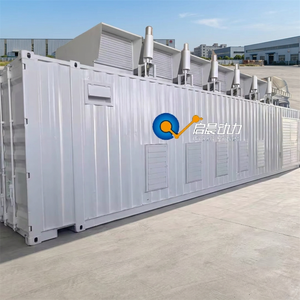
High Cube Container Manufacturing Landscape: Structural Engineering & Factory Sourcing Guide
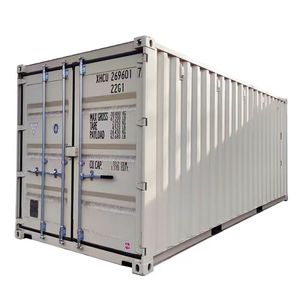
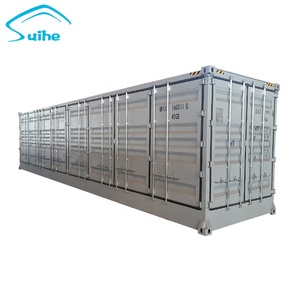
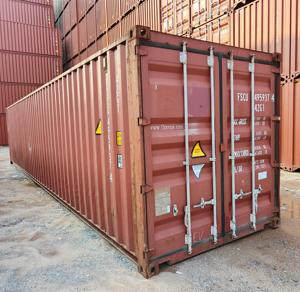
The intermodal dry cargo landscape has experienced a generational paradigm shift. High Cube containers—predominantly manufactured in 40-foot and specialized 20-foot profiles with an external height of 9 feet 6 inches (2,896 mm)—have transitioned from non-standard alternatives to the absolute benchmark for global volume-critical freight and modern architectural volumetric modules. With an extra 305 mm (12 inches) of vertical clearance compared to standard standard GP (General Purpose) containers, the High Cube configuration delivers approximately 12% to 15% more internal cubic capacity. For logistics operators, industrial equipment packagers, and modular home fabricators, this incremental height provides the decisive engineering clearance required for deep HVAC plenums, subfloor mechanical systems, high-density server racks, and acoustic insulation envelopes.
A rigorous industrial analysis reveals that the top tier of High Cube container manufacturing is concentrated among highly automated, continuous-line rolling factories. These facilities utilize hot-rolled structural shapes, robotic submerged arc welding (SAW), and automated zinc-rich epoxy multi-stage coating tunnels. Understanding the metallurgy, welding tolerances, and certification regimens of these top factories is vital for enterprise buyers, B2B procurement heads, and engineering contractors aiming to optimize total cost of ownership (TCO) and avoid logistical non-compliance.
Metallurgical Superiority (Corten-A / SPA-H)
Factory tier-one production relies on high-grade Corten weather-resistant steel. Exposure to moisture generates a dense, protective copper-phosphorus oxide patina that dramatically retards electrolytic corrosion in trans-oceanic and extreme climate deployments.
Floor Load Capacity & Marine Ply
Standard high cube builds feature 28mm keruing or apitong hardwood multi-layer marine plywood, pressure-impregnated with phenolic resins and insecticides, engineered to withstand heavy axle forklift loadings exceeding 5,460 kg (12,000 lbs) as specified by ISO 1496-1.
Dimensional Tolerance & Corner Castings
Fabricated with cast steel corner blocks according to ISO 1161, high cube factories maintain strict diagonal tolerance limits under 10mm across 40 feet, guaranteeing safety during stacking up to 9-high fully loaded tiers aboard Ultra Large Container Vessels (ULCV).
Engineering Dimensional Comparison: Standard GP vs. High Cube (HC)
Procurement directors must calculate interior volumetric efficiency before issuing requests for proposal (RFPs). Below are the structural parameters standardized across leading ISO certified manufacturing plants:
| Container Profile | External Dimensions (L × W × H) | Internal Dimensions (L × W × H) | Door Opening (W × H) | Tare Weight | Cubic Capacity |
|---|---|---|---|---|---|
| 20' Standard GP | 20' (6.058m) × 8' (2.438m) × 8'6" (2.591m) | 19'4" (5.898m) × 7'8" (2.352m) × 7'10" (2.393m) | 7'8" (2.343m) × 7'6" (2.280m) | 2,230 kg | 33.2 m³ (1,172 cu ft) |
| 20' High Cube | 20' (6.058m) × 8' (2.438m) × 9'6" (2.896m) | 19'4" (5.898m) × 7'8" (2.352m) × 8'10" (2.698m) | 7'8" (2.343m) × 8'5" (2.585m) | 2,400 kg | 37.4 m³ (1,320 cu ft) |
| 40' Standard GP | 40' (12.192m) × 8' (2.438m) × 8'6" (2.591m) | 39'5" (12.032m) × 7'8" (2.352m) × 7'10" (2.393m) | 7'8" (2.343m) × 7'6" (2.280m) | 3,750 kg | 67.7 m³ (2,390 cu ft) |
| 40' High Cube (40HQ) | 40' (12.192m) × 8' (2.438m) × 9'6" (2.896m) | 39'5" (12.032m) × 7'8" (2.352m) × 8'10" (2.698m) | 7'8" (2.343m) × 8'5" (2.585m) | 3,900 kg | 76.2 m³ (2,694 cu ft) |
Future Procurement Trends: Where Container Fabrication Is Heading
The manufacturing and procurement of High Cube shipping containers is undergoing rapid evolution driven by international decarbonization treaties, supply chain digitisation, and modular prefabrication demands:
1. Waterborne Anti-Corrosion Paint Formulations: Due to stringent Volatile Organic Compound (VOC) emissions restrictions across major industrial manufacturing zones, top factories have retooled their painting lines to accommodate two-component waterborne epoxy primers and acrylic topcoats. Enterprise buyers are evaluating these coating regimens for longevity, especially in corrosive marine environments (C5-M standards).
2. Smart Telematics and Embedded IOT Hardware: High cube dry freight containers are increasingly ordered factory-ready with built-in cutouts and non-conductive composite panels designed to host GPS/LTE/Satellite transceivers, door status sensors, and humidity telemetry. This trend eliminates aftermarket drilling that compromises weather-tight warranties.
3. Decarbonized Steel Sourcing (Green Corten): Factory ESG compliance is becoming a critical evaluation criterion in institutional RFPs. Tier-one container factories are securing raw hot-rolled coils from mills utilizing Electric Arc Furnaces (EAF) powered by renewable energy, reducing the embodied carbon footprint per container shell by up to 40%.
4. Dual-Purpose Architectural Modular Prep: Leading factories now produce High Cube shells featuring pre-welded perimeter window and door stiffening headers, thermal bridge decouplers, and pre-punched utility conduits directly off the assembly line. This offsite pre-engineering slashes onsite conversion schedules for housing developers and commercial builders by weeks.
Factory Quality Control Protocol: The 7-Point Industrial Audit
When contracting large-volume production runs with overseas or domestic high cube manufacturing facilities, your technical inspection team or third-party surveyor (e.g., Bureau Veritas, DNV-GL, Lloyd's Register) should enforce the following non-negotiable inspection milestones:
• Weld Joint Continuous Penetration: Radiographic or ultrasonic testing of corner casting to rail junction welds to eliminate structural micro-porosity.
• Shot-Blasting Profile: Steel preparation to ISO SA 2.5 standard before priming, ensuring maximum mechanical paint adhesion.
• Dry Film Thickness (DFT) Calibration: Verification that total primer and topcoat DFT meets or exceeds 110–130 microns across corrugated sidewalls and roof panels.
• Light & Water Ingress Testing: 100% enclosed dark-room high-intensity light leak inspection followed by high-pressure hydraulic deluge testing at 1 bar pressure.
• Floor Phenolic Bonding & Sealant Beading: Verification of unbroken polyurethane sealant beads along internal floor-to-wall interfaces.
• CSC Plate Certification: Issuance of formal International Container Safety Convention (CSC) classification documentation prior to container dispatch.
Why Partner With Our Manufacturing Network?
Decades of hands-on structural construction expertise, factory-direct pricing, and complete in-house quality control from raw steel forming to complex multi-unit modular engineering.
In-House Factory Direct
We are not brokers. Steel processing, framing, robotic welding, MEP installation, and finishes take place under strict in-house supervisory control.
Certified Atmospheric Steel
Every structural member is constructed from certified SPA-H Corten steel, ensuring exceptional resilience against harsh climatic and marine environments.
Turnkey & Ready to Ship
Maintain immediate inventory of standard and modified High Cube units to skip prolonged manufacturing lead times for urgent infrastructure projects.
Global Logistics & Delivery
Comprehensive ocean freight, intermodal rail, and heavy flatbed direct-to-site logistical coordination with full documentation and customs support.
Frequently Asked Questions on High Cube Container Sourcing
Key answers to the most common structural, logistic, and regulatory questions submitted by enterprise procurement engineers.
What is the key structural difference between a standard GP and a High Cube?
A High Cube container provides exactly 1 foot (12 inches / 305 mm) of additional vertical clearance, standing at 9'6" overall height compared to standard 8'6". This yields approximately 12-15% more internal volume without increasing the container's footprint.
Why are High Cube containers preferred for modular housing & data enclosures?
Standard GP containers leave an internal finished ceiling height under 7'2" once insulation and flooring are installed. High Cube units allow comfortable 8-foot finished ceilings while retaining ample room for recessed electrical conduits, HVAC trunking, and plumbing runs.
What does "One-Trip" mean in container factory procurement?
"One-Trip" containers are brand new units manufactured in overseas factories, loaded with dry freight once to subsidize transit costs, and discharged at destination ports in mint condition with zero corrosion and immaculate interior flooring.
How are ISO corner castings validated for stacking compliance?
Every corner casting conforms to ISO 1161 and is cast from weldable structural steel. During factory type-testing, assembled units are subjected to vertical compression tests up to 86,400 kg per post to ensure they withstand fully loaded shipboard stacking conditions.
Can High Cube containers be transported on standard chassis trailers?
Yes. However, the tractor-trailer must utilize a "gooseneck" chassis. The tunnel recess in the front understructure of a 40HQ container nests over the raised gooseneck section of the chassis, keeping total road height within federal highway clearance regulations.
How do factory warranties protect against structural defects and leaks?
Leading manufacturers provide a 5-year structural integrity warranty and a 3-year paint finish guarantee against blistering or flaking under standard operations, supported by CSC inspection certs issued upon factory gate checkout.
Connect Directly With Our Engineering & Sourcing Team
Whether you require a fleet order of new 40ft High Cube containers, customized equipment housing units, or certified one-trip storage assets, our technical specialists are ready to review your blueprints and logistics schedules.
Contact Us