ISO 9001 & CSC Certified Logistics Infrastructure

Top China Open Top Containers Suppliers & Exporters

B2B Whitepaper & Strategic Sourcing Guide: Engineering High-Payload Heavy Cargo Logistics, Bulk Machinery Movement, and Structural Modular Adaptations

30,480 KG

Standard Max Gross Mass

SPA-H Steel

Weather-Resistant Corten

100% Turnkey

In-House Modification MEP

Global Tier-1

Export & Sea-Freight Hubs

Verified Industrial & Modular Product Line

High-Performance Open Top & Specialized Logistics Enclosures

Explore factory-direct ISO intermodal platforms, side-loading conversions, portable architectural units, and industrial auxiliary equipment engineered for global export standards.

Technical Engineering Analysis

Structural Anatomy of China-Manufactured Open Top Containers

Understanding the load-bearing dynamics, metallurgical standards, and overhead rigging compliance required for project-grade intermodal operations.

Executive Sourcing Perspective: Open top containers (OT) represent the pinnacle of heavy machinery and bulk-break shipping solutions. By removing the conventional rigid corten steel roof and substituting high-tensile removable steel roof bows with reinforced PVC tarpaulins (or hydraulic hard-tops), exporters gain vertical overhead gantry accessibility while retaining extreme stacking and torsional rigidity.

Removable Roof Bows & Tarpaulins

Fabricated from heavy-duty galvanized structural tubular steel, roof bows preserve side-wall geometry against outward cargo thrust. Fitted with 650g/m² flame-retardant, UV-stabilized PVC tarpaulins secured by TIR plastic-sheathed steel cables, guaranteeing customs sealing and airtight weather protection during ocean crossings.

Swing-Out Removable Rear Headers

To eliminate vertical clearance bottlenecks when forklifting extra-tall machinery, top-tier Chinese open top units incorporate swing-out or fully detachable rear door headers. This allows crane slings, reach-stackers, and overhead monorails to slide oversized industrial engines or marble blocks straight past the door jamb line.

SPA-H Atmospheric Corten Steel

All structural corner castings (ISO 1161), longitudinal rails, and bottom side sills utilize heavy gauge SPA-H weathering steel. Its dense patina layer delivers rust resistance against harsh sea salt mist, enabling a certified 9-high container vessel stacking load (up to 216,000 kg on corner posts) under ISO 1496-1 testing protocol.

Market Intelligence & Procurement Horizon

Emerging Trends in Open Top Container Manufacturing & Global Trade

Strategic shifts in specialized container procurement for procurement directors, logistics engineers, and large-scale asset leasing operators.

Why Source Direct from Our Manufacturing Network

Integrated Engineering, End-to-End Control, Global Delivery

Combining world-class Chinese industrial manufacturing scales with precision engineering, quality management, and transparent B2B collaboration.

In-House Production & Zero Broker Markup

From initial raw plate uncoiling, automatic shot-blasting, and corten wave corrugation, to high-build zinc epoxy coating and automated robotic welding, all processes take place on our primary factory floors. This direct connection protects your margins, standardizes quality, and avoids trading company markups.

CSC & Marine Classification Certification

Every open top and specialized container is supplied with valid CSC (Convention for Safe Containers) safety approval plates. Structural models undergo third-party proof testing audited by classification societies including Bureau Veritas (BV), ABS, Lloyd's Register (LR), or CCS, ensuring swift clearance at international marine terminals.

Turnkey Architectural MEP & Outfitting

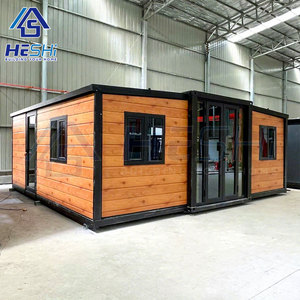
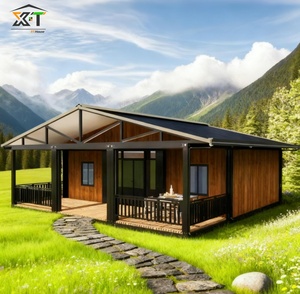
Beyond raw industrial shipping containers, our specialized conversion workshops pre-install full electrical rough-ins, commercial HVAC systems, acoustic dampening linings, and customized access hatches before ocean dispatch. Units arrive at your job site ready to set, connect, and commission without complex on-site welding.

Technical Clarifications

Frequently Asked Questions on Open Top Container Procurement

Addressing engineering specifications, logistical restrictions, tariff considerations, and customs documentation.

What is the structural difference between a Hard Top and Soft Top Open Container?
A soft-top open container utilizes removable steel roof bows and a heavy-duty, weather-resistant PVC tarpaulin secured with a TIR cable, which simplifies top crane loading and provides flexibility for irregular shapes. A hard-top container features a solid, detachable sheet-steel roof that can be lifted with a crane or spreader beam. The hard-top design delivers higher security, prevents slash-theft during international rail transit, and maintains full structural weather tightness for corrosive bulk materials.
Can an open top container carry cargo that exceeds the standard roof height?
Yes, this is known as Out-of-Gauge (OOG) or over-height cargo. When the cargo protrudes beyond the top side rails, the standard tarpaulin can be left uninstalled or substituted with custom tailored high-clearance protective covers. Keep in mind that OOG freight cannot be top-stacked aboard container vessels, meaning ocean shipping lines apply slot loss surcharges. For frequent over-height needs, 40-foot High Cube Open Top (9'6" height) units should be specified to keep loads in-gauge whenever possible.
What steel specification is used to prevent rapid rusting during long ocean transits?
Our manufacturing uses high-tensile SPA-H or equivalent atmospheric corrosion-resistant Corten steel across all corrugated side panels, cross-members, corner posts, and perimeter header rails. This alloy develops a stable, self-regenerating oxide layer when exposed to ocean salt air. It is paired with an automated SA 2.5 shot-blasting process, a zinc-rich epoxy primer (minimum 30μm), and an acrylic or polyurethane topcoat (minimum 40μm dry film thickness).
What are the minimum order quantities (MOQ) and production lead times for custom specs?
Standard ISO 20ft and 40ft open top containers typically maintain an MOQ of 1 to 2 units for standard inventory configurations, while fully custom architectural modifications, side-opening adaptations, or specialized heavy floor reinforcement usually have an MOQ of 2 to 4 units. Standard factory manufacturing lead times run 25 to 35 calendar days from final structural drawing sign-off and deposit receipt.
How do you verify structural integrity before equipment leaves the factory?
Prototypes and batch samples undergo ISO 1496-1 safety testing: vertical stacking tests (up to 86,400 kg per post), floor strength testing via loaded industrial forklift axles (up to 7,260 kg), transverse racking, end-wall/side-wall rigidity tests, and full-volume water tightness spray tests. Each certified container has its inspection recorded and carries an updated CSC safety plate for global operations.

Initiate Your Open Top Container Sourcing Project

Connect with our technical engineering team for structural GA drawings, custom roof bow load tables, container yard stock positions, or firm freight quotations to your destination port.