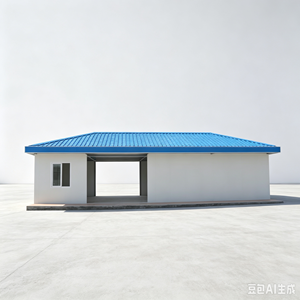
Explore our certified structural steel shelters, bilateral wing living modules, and off-grid generator solutions engineered for direct freight deployment to Haifa and Ashdod ports.
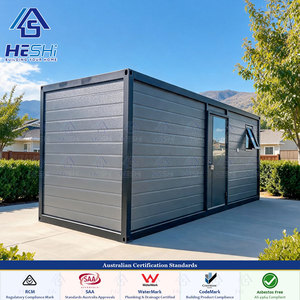
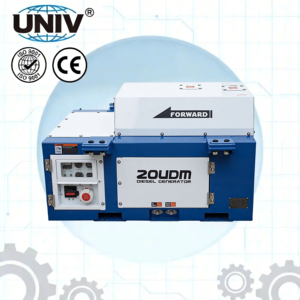

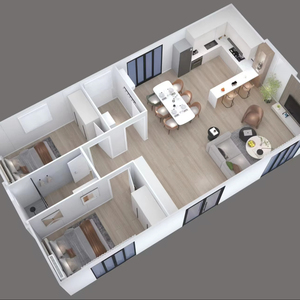
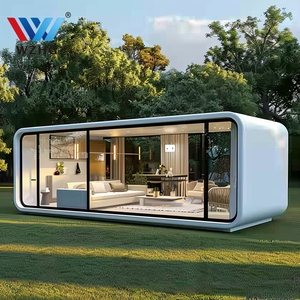
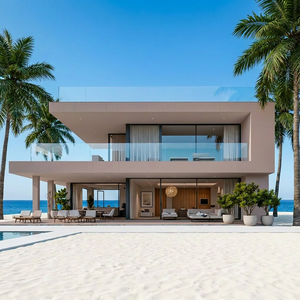
From the arid Negev Desert to the humid Mediterranean coastal rim and the Golan Heights, our expandable container systems satisfy complex geotechnical, acoustic, and tactical demands.
The southern desert demands unyielding resilience against wide diurnal thermal swings (-2°C to 48°C) and scouring sandstorms. Our expandable site operations units provide airtight seals, dust-proof MEP filtration, and PIR structural sandwich panels with low thermal conductivity (λ=0.022 W/m·K) to maintain cleanroom environments and housing for remote infrastructure engineers.
Municipal preparedness in the central and northern districts relies on accelerated mobilization. Our 3-in-1 expandable modules transition from flat shipping profile to 75 m² of functional space in under 30 minutes, serving as rapidly commissionable command outposts, field triage hubs, and temporary displaced-citizen dwellings requiring zero specialized foundation pouring.
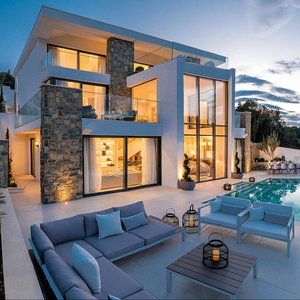
Between the Dead Sea resorts, Mitzpe Ramon, and the Mediterranean coastline, hospitality developers deploy our luxury space capsules and light-gauge steel villas. With marine-grade anti-corrosive primer systems and high acoustic attenuation (Rw > 48 dB), these assets deliver boutique, zero-impact accommodations that align with stringent National Outline Plan (Tama 35) rural preservation standards.
The acceleration toward industrialized building (Bniya Te'uysit) is reshaping real estate, civil engineering, and temporary housing economics across Israel.
Severe skilled labor shortages across Israel's building sector have increased traditional construction schedules by over 45%. Offsite factory-finished expandable containers remove 85% of physical site work. Structural frames, complete internal electrical runs, pre-plumbed sanitary fixtures, and thermal insulation are fully finalized inside our centralized factory prior to ocean freight loading.
All load-bearing expandable frames conform to the dynamic lateral requirements of Israeli Standard SI 413 for earthquake resistance, absorbing lateral acceleration via high-ductility cold-rolled steel profiles. Furthermore, interior wall partitions and core insulation assemblies satisfy SI 921 Reaction to Fire benchmarks, mitigating toxic halogen gas generation and flame spread.
Public infrastructure projects in Israel require adherence to SI 5281 Sustainable Building parameters. Expandable steel structures drastically minimize water consumption, eradicate onsite aggregate waste, and achieve superior thermal envelope sealing, helping developers gain mandatory green building credits while maintaining high residual asset valuation.
| Performance Parameter | Export Factory Baseline Specification | Israeli Regulatory Equivalent Reference | Local Performance Advantage |
|---|---|---|---|
| Seismic Resistance | Dynamic lateral bracing up to PGA 0.35g | Israeli Standard SI 413 | Resilient ductile behavior; ideal for Jordan Rift Valley fault lines. |
| Fire Retardancy | A1 Non-combustible mineral wool / Class B1 PIR | Israeli Standard SI 921 / SI 755 | Self-extinguishing wall assemblies prevent toxic smoke propagation. |
| Marine Corrosion Protection | Two-pack epoxy zinc-rich primer + polyurethane topcoat | ISO 12944: C4 to C5-M classification | Withstands salt-spray corrosion along coastal Haifa, Ashdod, and Tel Aviv. |
| Thermal Envelope | Overall U-value: 0.28 W/(m²·K) with continuous thermal breaks | Israeli Standard SI 1045 Thermal Insulation | Drastically lowers HVAC loads during intense summer heatwaves. |
| Electrical Infrastructure | Pre-installed fire-rated conduit, 230V/400V 50Hz single/3-phase | Israel Electricity Authority (Chahak) / SI 61439 | Direct drop-in utility hookup without rewiring walls on-site. |
Combining American builder discipline established in 2015 with high-throughput automated modular facilities, we deliver fully integrated engineering, turnkey fabrication, and comprehensive export QA.
We are not brokers. Structural steel stamping, anti-rust blast treatment, laser cutting, polyurethane core injection, MEP installation, and decorative surface carpentry are managed by a single engineering team under one roof. This integrated workflow prevents third-party delays and guarantees tight tolerance control (< 1.5mm variance across structural corner points).
Every modular unit is designed to interface with minimal site foundations, including micropiles, perimeter strip concrete footing, or structural ground screws. This significantly reduces site preparation timelines in rough, rocky terrain such as the Judean Hills or unstable sand-clay geologies in southern regions.
Standardized ISO dimensions ensure our expandable containers ship with regular container freight rates, avoiding costly breakbulk charges. Each unit features certified corner castings and fork pockets. Bilateral units fold to a compact 2.25m transport width, fitting standard low-bed trailers across Israel’s Route 6 and regional logistical corridors.
Essential guidance covering technical compliance, port clearance procedures, and on-site integration for commercial developers, agricultural collectives, and emergency response teams.
We regularly ship through Haifa and Ashdod ports via primary ocean carriers. Expandable containers ship in folded form with certified ISO corner locks, functioning as standard CSC ocean containers. This avoids breakbulk shipping penalties and allows seamless transfer onto flatbed container chassis without escort permits.
Yes. While container structures themselves are non-ballistic modular steel framing, our factory-engineered configurations provide reinforced structural interface plates. This allows our expandable buildings to anchor directly adjacent to precast concrete Mamad (Protected Space) units in full compliance with Home Front Command guidelines.
Yes. Every export model targeting the Israeli market is wired with flame-retardant halogen-free conduits, fitted with Type H compatible socket boxes or European CEE 7/7 formats, and features a dual-rated 230V single-phase / 400V three-phase 50Hz distribution panel ready for certification by licensed local electricians.
Expandable structures feature high-strength integrated perimeter steel chassis. Unlike traditional masonry builds, they require only level concrete pads at the corner and hinge leveling points, engineered ground screws, or simple concrete strip footing, drastically reducing site excavation requirements and associated civil engineering costs.
We employ a multi-step anti-corrosion system: automated shot-blasting to Sa 2.5 profile, followed by a heavy zinc-rich epoxy primer and an automotive-grade fluorocarbon or polyurethane topcoat. This system resists UV breakdown in the intense Negev sun, salt-mist corrosion near coastal ports, and abrasive desert winds.
Standard production cycles range from 20 to 35 days depending on the customization tier and quantity. Ocean freight from manufacturing to Ashdod or Haifa ports averages 24 to 30 days. For urgent requirements, select ready-to-ship inventory modules can be released for export packing immediately upon final contract approval.
Collaborate directly with our modular engineering department. We provide comprehensive CAD layouts, structural calculations, and CFR Ashdod / Haifa freight options tailored to your project schedule.