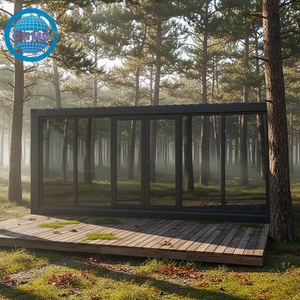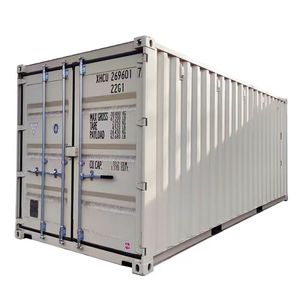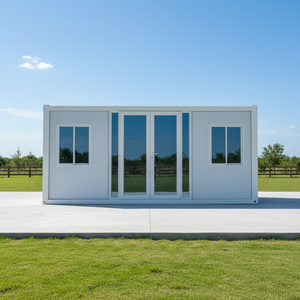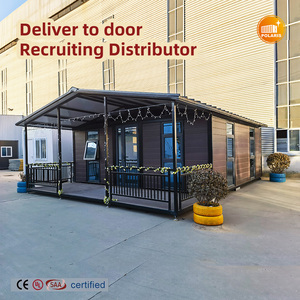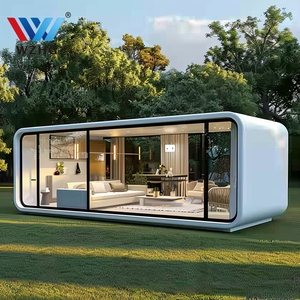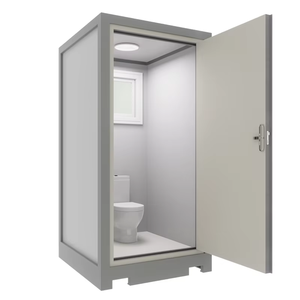
From robust 10ft site utility hubs to complete 40ft High Cube offshore mechanical repair stations, explore our heavy-duty platforms precision-fabricated for seamless rapid deployment across Norway.
Operating industrial machinery, conducting preventative subsea equipment maintenance, and managing hydro-generation assets in the Kingdom of Norway requires far more than a converted freight box. Norwegian geographical topography presents severe engineering challenges: extreme ambient temperature variations from deep sub-zero conditions in Finnmark and Svalbard to corrosive, salt-laden gale winds in the coastal fjords of Vestland and Rogaland.
As premier mobile container workshops manufacturers & exporters serving Norway, we engineer every mobile enclosure from high-tensile Corten structural steel (SPA-H). The outer shell undergoes automated abrasive blast cleaning to ISO 8501-1 Sa 2.5, coated with specialized zinc-rich epoxy primers, an intermediate high-build micaceous iron oxide barrier, and a resilient aliphatic polyurethane topcoat. This ensures compliance with ISO 12944 C5-M (Very High Marine) classifications, preventing pitting and severe corrosion in high-salinity offshore support yards and harsh coastal vessel berths.
Internally, our mobile container workshops incorporate thermal breaks and continuous, fire-retardant polyisocyanurate (PIR) or stone wool core panels reaching insulation thicknesses of up to 100mm–150mm. This delivers exceptional thermal conductivity metrics (U-values below 0.18 W/m²K), matching the stringent energy-conservation parameters dictated by the Norwegian Building Technical Regulations (TEK17). By preventing thermal bridging, condensation accumulation, and freeze-thaw degradation, our units protect sensitive CNC gear, digital calibration instruments, hydraulic test benches, and onboard technician comfort.
Configured specifically for the logistical reality of offshore bases, high-latitude mining, deep-fjord fish farms, and green energy megaprojects.
Positioned at coastal logistical hubs in Stavanger, Mongstad, and Kristiansund. Outfitted with DNV GL certified sling attachment points, spark-proof electrical safety enclosures, and dedicated valve, hydraulic seal, and subsea umbilical servicing benches.
Operating along mountainous inland valleys and remote wind farms in Trøndelag. Built with integrated heavy-duty jib cranes, high-capacity 400V 3-phase power drops, and climate-controlled rooms for high-voltage transformer and turbine repairs.
Delivered to marine feed platforms and fjord-side processing hubs. Features stainless steel wash-down walls, chemical-resistant anti-slip polyurea floors, and localized welding fumes extraction systems for maintaining catamaran service workboats.
Deployed on major Statens vegvesen civil tunneling sites and northern iron operations. Engineered with dual thermostatically controlled fan coils, high-frequency impact-resistant steel work surfaces, and compressed air distribution loops.
The industrial procurement landscape in Norway is experiencing a paradigm shift driven by strict environmental criteria, autonomous project delivery, and electrification policies formulated under the Norwegian Climate Action Plan.
Municipal infrastructure contracts now enforce fossil-free construction sites (Utslippsfrie byggeplasser). We integrate rooftop photovoltaic micro-inverters, integrated lithium iron phosphate (LiFePO4) energy storage banks, and zero-loss thermal heat recovery units (HRV) that maintain 21°C internal workspaces using negligible battery draw.
Reclaiming ISO shipping container shells prevents substantial embodied carbon emissions compared to site-cast concrete or stick-built wooden facilities. Full Environmental Product Declarations (EPD) are provided to assist general contractors in calculating carbon budgets under BREEAM-NOR benchmarks.
Norwegian sites operating in isolated polar fjords rely on embedded telemetry. Our mobile workshops are fitted with external high-gain Starlink and 5G terminal interfaces, interior environmental tracking (VOC, relative humidity, pressure differentials), and digital remote access security.
Review structural configurations, interior clearance dimensions, thermal limits, and lifting capacities built to survive rough North Sea and Arctic transport.
| Specification Feature | 10ft Extreme Compact Unit | 20ft ISO Heavy-Duty Standard | 40ft High Cube Multi-Bay Workshop |
|---|---|---|---|
| External Dimensions (L × W × H) | 2,991 × 2,438 × 2,591 mm | 6,058 × 2,438 × 2,591 mm | 12,192 × 2,438 × 2,896 mm |
| Corten Steel Frame Thickness | 3.0 mm – 4.5 mm Structural Profile | 4.0 mm – 6.0 mm Corner Posts | 6.0 mm High Tensile SPA-H Castings |
| Thermal Insulation (TEK17 Compliant) | 80 mm PIR Core Panels | 100 mm Stone Wool / PIR Core | 120 mm Dual-Skin Polyurethane Core |
| Internal Electrical Standards | 230V / 16A Single Phase (IT/TN Grid) | 230V / 400V 32A Dual System | 400V / 63A 3-Phase Heavy Distribution |
| Floor Load Rating & Finish | 3,500 kg/m² Textured Checker Plate | 5,000 kg/m² Heavy Marine Plywood + Plate | 7,500 kg/m² Reinforced Structural Floor |
| Ventilation & Atmospheric Control | Louvered Forced Fan (150 m³/h) | ATEX Fume Extractor + 3.5kW Heat Pump | Central HRV System + Dual Inverter HVAC |
| Logistics & Transport Rating | CSC Certified / Corner Castings | CSC Plated, DNV Pad Eyes Optional | CSC Worldwide Ocean Freight Standard |
Drawing on decades of structural steel fabrication and factory-integrated conversions founded by experienced builder Robert Wagoner, our manufacturing philosophy eliminates intermediate middle-tier brokers. When procurement teams in Oslo, Bergen, or Trondheim place an order, our single-facility workflow encompasses structural slicing, reinforced frame engineering, MEP (Mechanical, Electrical, Plumbing) integration, industrial millwork, and electrical commissioning under one roof.
Because we manage the complete lifecycle—from raw ISO shipping container selection to certified electrical load testing—we enforce tight fabrication tolerances, document full traceability of steel and insulation materials, and accommodate exact architectural requirements. Whether your project necessitates flame-retardant tool storage lockers, pneumatic air lines routed behind anti-vibration panelling, or ATEX-certified dust collection enclosures, our factory floor directly delivers bespoke, turn-key solutions that reduce field setup times on Norwegian sites from weeks to hours.
All modifications, architectural drafts, certified welding procedures, and interior panel fitouts occur under unified factory quality controls.
Units hold valid CSC safety plates for regular maritime shipping, arriving efficiently via direct routes into Drammen, Oslo, and Stavanger ports.
Electrical circuits, compressed air manifolds, and heat pump systems are pressure- and continuity-tested before dispatch for instant on-site hookup.
Answers to common structural, logistical, and compliance questions regarding importing mobile container workshops into Norway.
Consult with our structural engineers and modular export specialists today. We provide precise CAD layout drawings, comprehensive electrical wiring schematics, and accurate door-to-door freight estimates to any port or project site in Norway.
Get a Quote