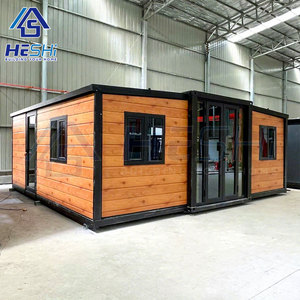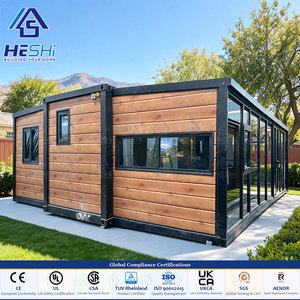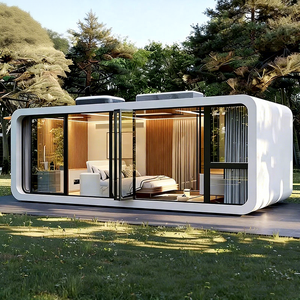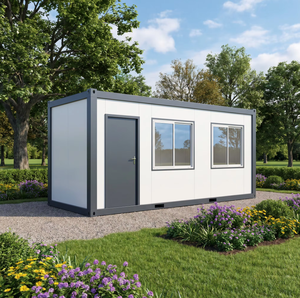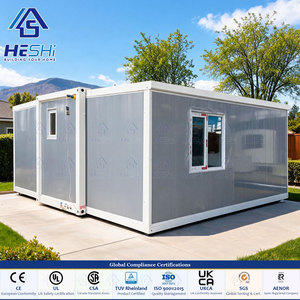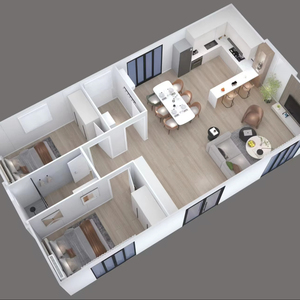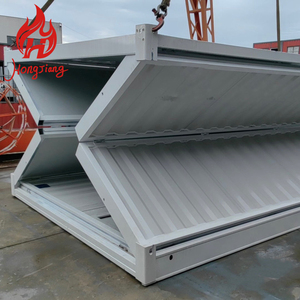
Turnkey 20ft and 40ft expandable, flat-pack, and architectural capsule units manufactured to European structural standards for boutique hospitality, island residences, and agro-tourism.
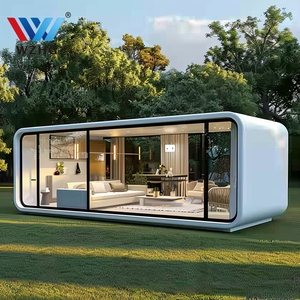
A strategic structural, thermal, and logistics blueprint for Greek hospitality operators, private developers, and landholders seeking compliant off-site manufactured (OSM) dwellings.
The Hellenic property landscape presents an intricate convergence of demanding climatic forces, seismic risks, strict environmental preservation directives, and high-yield hospitality cycles. In regions like the Cyclades, the Ionian Archipelago, Crete, and the Peloponnese, traditional stick-built and wet-concrete construction faces mounting bottlenecks: chronic labor shortages, soaring material shipping costs via maritime freight, and protracted permitting intervals. Factory-engineered tiny container homes provide a disruptive, industrialized solution, combining marine-grade Corten steel monocoque structural rigidity with bespoke high-insulation panel systems.
However, importing and siting modular container homes in Greece cannot rely on generic, temperate-climate specifications. A structural enclosure built for standard inland conditions will rapidly degrade when subjected to the saline marine aerosol of the Aegean Sea, fail the thermal load mandates set by KENAK (Regulation on the Energy Performance of Buildings), or violate the seismic shear limitations imposed by EAK 2000 and Eurocode 8. As an established direct-to-developer manufacturing entity with over a decade of precision off-site building expertise, our engineering group constructs high-cube container and expandable units specifically configured to meet Greek and wider European Union structural codices.
| Engineering Parameter | Standard Global Container Specification | Factory Greece-Spec Compliance Profile | Regulatory / Environmental Reference |
|---|---|---|---|
| Structural Chassis | Standard Mild Steel (Q235/Q345) | Heavy-Gauge Corten-A Cor-Ten Steel (SPA-H) | EN 10025-5 / Atmospheric Marine Durability |
| Anti-Corrosion System | Single Epoxy Primer + Acrylic Topcoat (80µm) | ISO 12944 C5-M Marine Coating (Zinc Silicate + PU 240µm) | Aegean Coastal Saline Atmosphere Protection |
| Seismic Performance | Standard rigid frame, static analysis only | High-ductility monocoque box frame (Ground Accel. up to 0.36g) | Eurocode 8 (EN 1998-1) / Greek Seismic Zone III |
| Thermal Core (U-Value) | 50mm EPS Panel (U ≈ 0.65 W/m²K) | 100mm High-Density PIR Core + Thermal Breaks (U ≤ 0.18 W/m²K) | KENAK Energy Class A/A+ Compliance |
| Fenestration Performance | Single/Double Glazing Aluminum (Ug ≈ 2.8) | Argon-Filled Low-E Double/Triple Glass, Thermal Break Frames (Ug ≤ 1.1) | Solar Heat Gain Coefficient (SHGC) < 0.35 (Summer Heatwaves) |
| Electrical / MEP Layout | Variable domestic standards | CE Certified, 230V/50Hz, Pre-piped PEX-AL-PEX, Dual Circuit RCD | HD 384 / ELOT 60364 Greek Electrical Standards |
Thermal Engineering Under Intense Hellenic Solar Loads: Summer ambient temperatures across Attica, Thessaly, and Crete frequently cross 40°C, compounded by high solar irradiance on horizontal and vertical surfaces. A standard bare container converts into a thermal trap without rigorous interstitial isolation. Our Greek-bound modular units incorporate complete external or continuous internal non-conductive framing that interrupts steel-to-drywall thermal bridges. Coupled with high-density polyisocyanurate (PIR) cores, reflective cool-roof coatings, and specialized cross-ventilation fenestration schemes, our units maintain interior thermal equilibrium while cutting seasonal air-conditioning electrical loads by up to 62%.
Addressing the Cycladic Architectural Aesthetic (Law 4067/2012 - NOK): Visual and landscape harmony is rigorously enforced by local Greek Architectural Committees (*Architektoniki Epitropi*). On islands such as Paros, Tinos, Naxos, or Santorini, visible corrugated shipping container steel is strictly prohibited in scenic areas. Our manufacturing process integrates factory-prepped mechanical attachment channels allowing immediate on-site cladding with local limestone, smooth off-white lime plaster composites, or horizontal timber louvers. The structure retains all structural, logistical, and cost advantages of pre-assembled Corten steel modules while flawlessly conforming to local vernacular forms.
Seismic Superiority over Unreinforced Masonry: Greece is the most seismically active country in Europe, accounting for roughly half of the continent's seismic energy release. Traditional stone, brick, and unreinforced concrete structures are inherently vulnerable to tensile stresses and ground shear waves. By contrast, a welded high-cube container acts as a hyper-ductile structural diaphragm. In the event of high peak ground acceleration (PGA), the ductile nature of the Corten steel envelope flexes without brittle fracture, preventing catastrophic structural collapse. For sites perched along the Gulf of Corinth or the Ionian fault systems, tiny container homes provide an unmatched margin of physical safety.
Engineered to overcome geographical fragmentation, high island transport tariffs, and strict seasonal building moratoria.
High-end tourism operators in Mykonos, Santorini, and Kefalonia deploy 20ft and 40ft expandable villas to establish luxury seasonal suites. Because construction takes place in our controlled factory environment, hospitality developers bypass island summer construction bans (*pagoma oikodomikon ergasion*) and avoid the exorbitant cost of shipping raw aggregates, sand, and cement via Ro-Ro ferries.
Across Messinia, Laconia, and Crete, landholders leverage rural parcels (*ektos schediou*) to build boutique agritourism retreats. Utilizing low-impact helical pile or strip-footing foundation systems, our tiny container units sit gently on agricultural soil without permanently altering topsoil integrity, accelerating environmental clearances while preserving organic olive groves and vineyards.
One of Greece’s most acute socioeconomic pressures in popular island destinations is the severe lack of seasonal housing for resort staff, doctors, and municipal workers. Modular 20ft foldable and flat-pack container clusters provide dignified, climate-controlled, acoustic-isolated dormitories that can be rapidly assembled in April and securely winterized or relocated in November.
From decentralized energy independence to streamlined small-scale building approvals (*Mikris Klimakas*).
1. Decentralized Off-Grid Resilience: Many scenic plots throughout the Greek Aegean lack immediate connectivity to the national electrical grid (HEDNO/DEDDIE) or municipal water mains. Infrastructure hookup fees often exceed the baseline property value. The emerging generation of container developments in Greece relies on turnkey factory-integrated off-grid MEP systems: roof-mounted monocrystalline bifacial photovoltaic arrays, hybrid lithium iron phosphate (LiFePO4) storage banks, integrated greywater filtration, and rainwater harvesting catchments designed for dry Mediterranean summers.
2. Permitting Evolution via Small-Scale Approvals: While permanent residences require a comprehensive building permit (*Adeia Domisis*) stamped by a Greek-certified civil engineer, modular units installed on non-permanent foundation fixtures frequently leverage the expedited Small-Scale Works Permit (*Engrisi Ergasion Mikris Klimakas*). Under Law 4495/2017, this pathway reduces administrative approval timelines from twelve months down to a few weeks, allowing commercial entities to commission their modules in late winter and welcome revenue-generating guests by early May.
3. Accelerated Capital Amortization for Short-Term Rentals: On platforms like Airbnb and Vrbo, atypical experiential architecture—such as modern capsule pods and industrial-chic tiny container homes—commands an Average Daily Rate (ADR) 25% to 40% higher than conventional rural apartments. With total landed manufacturing and transport expenditures representing less than half the turnkey cost of conventional stone construction, Greek investors regularly achieve full return on investment (ROI) within two to three operational tourist seasons.
End-to-end engineering accountability with zero intermediate broker overhead, backed by a proven track record since 2015.
Every cut, weld, reinforcing lintel, and structural frame modification is conducted in our dedicated manufacturing plants. Structural engineers calculate load redistribution to ensure opening cuts do not compromise torsional stiffness.
Plumbing lines, pre-wired EU-spec fire-retardant electrical conduits, distribution panels, and high-efficiency inverter heat pumps are fully pre-fitted and wet-tested under pressure prior to container export.
Our units ship with certified CSC plates directly into the Port of Piraeus or Thessaloniki. We assist your shipping forwarder with precise lifting center-of-gravity schematics for local Ro-Ro island ferry connections.
From Cycladic clean white facades and cedar slats to triple-glazed curtain walls and accessible ADA bathroom configurations, every layout is custom-tailored to the buyer's documented plot constraints.
Clear, expert guidance addressing regulatory permits, island transit, marine rust, and technical installation.
Yes. Under Greek building law (Law 4495/2017 and NOK), any structure placed on land that is connected to utilities or fixed in place is treated as a building. Depending on the size, mobility, and foundation type, you will either need a standard building permit (*Oikodomiki Adeia*) or an expedited Small-Scale Works Approval (*Mikris Klimakas*). We supply detailed structural CAD drawings and static calculation reports to your local civil engineer (*politikos michanikos*) to ensure effortless submission to the municipal building office (*Poleodomia*).
Standard shipping containers utilize generic atmospheric paint. For units destined for Greek coastal zones, we fabricate using authentic Cor-Ten weathering steel (EN 10025-5), which forms a protective, non-porous passivation patina. Furthermore, we apply an ISO 12944 C5-M certified marine multi-stage coating system: an abrasive blast to Sa 2.5, followed by a zinc-rich silicate primer, a high-build epoxy intermediate tie-coat, and an aliphatic polyurethane topcoat. This protects against pitting corrosion even within 50 meters of the coastline.
Tiny container homes outperform conventional masonry in seismic events. Manufactured from cold-formed tubular steel members and corrugated monocoque panels, our structures possess high structural ductility. While concrete structures crack under seismic shear, our welded box systems shift slightly without brittle failure. The design meets Eurocode 8 requirements for Greek Seismic Zones I, II, and III (including seismic zones with high expected peak ground acceleration up to 0.36g).
Units are shipped via standard ocean vessel to the Port of Piraeus or Thessaloniki. From Piraeus, standard ISO dimensioned units (20ft and 40ft) or folded expandable modules are transferred directly onto flatbed trailers and loaded onto commercial roll-on/roll-off (Ro-Ro) freight ferries servicing the Cyclades, Dodecanese, and North Aegean. Upon arrival at the island port, a local crane truck or low-boy trailer transports the unit along narrow island roads directly to your prepared foundation site.
We isolate the structural steel envelope through continuous internal or external polyisocyanurate (PIR) rigid board insulation with thermal breaks that prevent thermal bridge transfer. Low-emissivity (Low-E) double or triple-glazed argon-filled window units minimize solar heat gain (SHGC < 0.35). High-SEER inverter heat pumps provide climate control, allowing the interior to maintain an optimal 22°C ambient temperature with minimal electrical power draw even in mid-July.
Because container structures rely on point-load corner castings, you do not need to pour an extensive, expensive concrete slab across the entire footprint. On rocky terrain common in the Aegean and Mani peninsula, developers typically use spot concrete footings (*pedia*), isolated reinforced concrete grade beams, or engineered galvanized steel ground screws (helical piles). This drastically limits site excavation, preserves natural rocky landscaping, and satisfies environmental regulations.
Yes. All factory wiring complies with European electrical standard HD 384 / ELOT 60364 (230V single-phase / 400V three-phase at 50Hz) utilizing flame-retardant low-smoke halogen-free (LSZH) conduit. Plumbing utilizes certified multi-layer PEX-AL-PEX supply lines and standard metric PVC drainage compatible with Greek municipal sewers or local septic absorption tanks (*vothroi*).
Custom fabrication and interior finishing at our facility require approximately 25 to 35 working days following architectural shop drawing sign-off. Maritime transit from our manufacturing terminal to the Port of Piraeus takes approximately 28 to 35 days. In total, developers can expect their fully equipped, turnkey modular container homes to arrive at the Greek destination port in approximately 70 to 90 calendar days.