Optimized for high thermal efficiency (Rc-values), circular reuse, and ultra-fast deployment across Amsterdam, Rotterdam, Utrecht, and offshore North Sea infrastructural corridors.
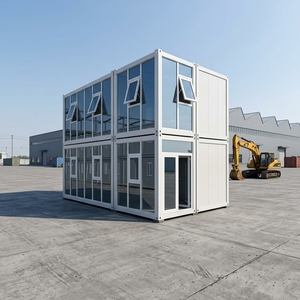
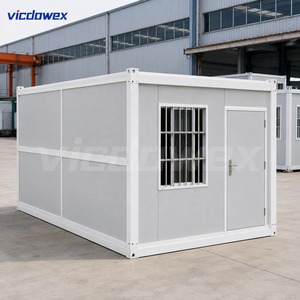
Low-cost fast-setup cabin engineered for tight urban job sites in the Randstad. Features quick unfolding mechanisms, galvanized substructure, and pre-fitted electrical wiring.
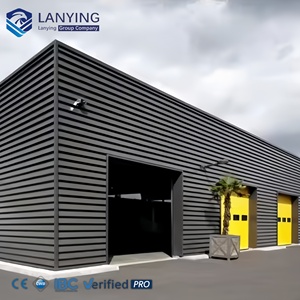
Clear-span industrial steel frames suited for large-scale central logistic distribution centers (DC) around the Port of Rotterdam and Schiphol trade zones.
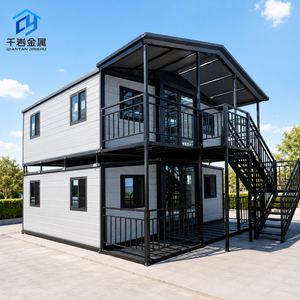
Multi-tier modular workforce living units with integrated acoustic dampening, centralized HVAC integration, and robust structural fire protection.
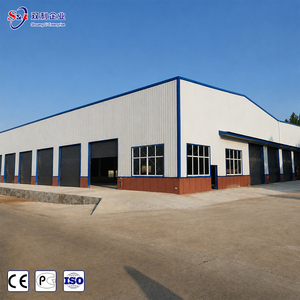
Rapid bolt-together architectural skeleton delivering secure on-site equipment storage, dry inventory staging, and maintenance facilities.
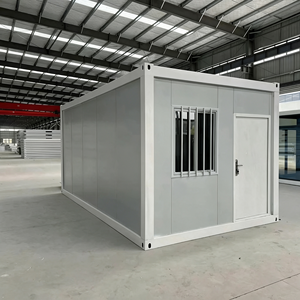
Engineered for mobile civil engineering teams requiring frequent camp relocation along Dutch waterways, dikes, and highway infrastructure.
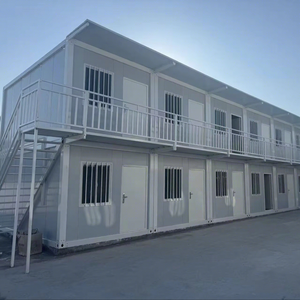
Flat-pack optimized modular cabins maximizing container shipping volume (up to 8 units in a 40HC shipping container), slashing logistics costs.
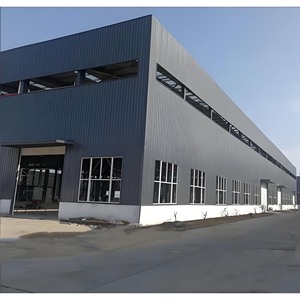
Heavy-duty structural sections featuring marine-grade anti-corrosive primer coating designed for aggressive coastal salinity zones in Zeeland and Groningen.
Reinforced chassis and corner casting nodes, certified for high dynamic stability, flexible deployment, and multi-cycle lifecycle recovery.
Strategic procurement considerations for Dutch main contractors (Hoofdaannemers), developer consortiums, and civil engineering conglomerates facing rigorous environmental, thermal, and spatial benchmarks.
The construction sector across the Netherlands operates within one of Europe’s most strictly monitored regulatory environments. Driven by the Besluit bouwwerken leefomgeving (Bbl), the Dutch national transition toward a circular economy by 2050, and stringent nitrogen emissions limits (Stikstofcrisis), construction site accommodation can no longer be approached as disposable, drafty shipping containers. General contractors require high-performance, modular architectural solutions that guarantee worker wellbeing while satisfying rigorous environmental and fire protection ordinances.
The Dutch maritime climate exhibits constant high relative humidity, frequent rain, and sustained cold winds from the North Sea. Temporary accommodation modules that fail to implement proper thermal breaks inevitably experience interstitial condensation, resulting in mold growth and compromised indoor air quality. Direct-from-factory Chinese manufacturing provides substantial technical advantages when high-performance insulation envelopes are specified from the base production line:
Our units utilize continuous PIR (polyisocyanurate) and high-density stone wool (Rockwool) sandwich panels with densities exceeding 120 kg/m³. Thermal bridging is engineered out through EPDM thermal breaks installed between structural steel columns and inner wall cassettes. Floors are framed with fiber cement sub-floors coupled with closed-cell polyurethane spray foam, achieving thermal resistance ratings from Rc 3.5 to Rc 6.0 m²·K/W, effortlessly keeping interior HVAC energy loads aligned with Dutch temporary building permits.
Dutch building authorities strictly enforce fire resistance testing according to NEN-EN 13501-1. Where standard domestic Chinese containers often deploy basic EPS (expanded polystyrene), our Netherlands-export modules strictly integrate non-combustible cores achieving A1 or A2-s1, d0 flame spread and smoke development ratings. Structural steel pillars feature intumescent protective coatings delivering verified 30- to 60-minute structural integrity (WBDBO criteria), critical for stacked two-story and three-story worker quarters deployed on confined urban development lots in locations such as the Amsterdam Zuidas or Utrecht Science Park.
Tailored spatial and logistical configurations adapted to distinct Dutch ground and regulatory conditions.
Compact foot-print stacking systems engineered with enhanced sound reduction indices (Rw ≥ 42 dB) to protect workforce sleep cycles near active rail lines and highway nodes in Randstad city centers.
Heavy-duty corrosion-resistant cabins deployed on floating pontoons, dike reinforcement projects along the IJsselmeer, and Maasvlakte expansion zones, finished with C4/C5 marine-grade coatings.
Zero-emission all-electric turnkey welfare camps featuring integrated heat pumps, mechanical heat recovery ventilation (WTW), and pre-wired solar photovoltaic (PV) roof-bracket arrays.
A granular side-by-side engineering comparison illustrating how our factory-controlled fabrication process delivers exact compliance for Dutch engineering procurement teams.
| Structural / Functional Layer | Export Specification (Standard) | High-Spec Dutch Bbl Compliant Option | Regulatory Verification Basis |
|---|---|---|---|
| Chassis & Main Frame | Cold-formed Q235B galvanized steel, 2.5–3.0mm | Heavy-duty Q355B welded hollow sections, zinc coating ≥ 275g/m² | EN 1090-2 (Execution Class EXC2), CE Mark |
| Wall Insulation Core | 50mm EPS / Basic Glasswool | 80–100mm High-Density PIR or Rockwool (120kg/m³) | NEN-EN 13501-1 (Class A2-s1, d0 / Class B-s1, d0) |
| Floor Structure & Load | 16mm MGO board, live load 2.0 kN/m² | 18mm Fiber cement + medical-grade heterogenous PVC, 3.5 kN/m² | NEN-EN 1991-1-1 (Eurocode 1) |
| Glazing & Windows | Single/double pane aluminum sliding | uPVC or thermally-broken aluminum, argon gas-filled Low-E (Ug ≤ 1.1) | NEN 1068 (Energy calculation for buildings) |
| Electrical Installation | Standard multi-region wiring & sockets | Pre-loomed 230V/400V 50Hz, RCD protected, Type F sockets (Schuko) | NEN 1010 Low-voltage electrical installations |
Why international contractors, project developers, and equipment rental giants partner directly with our specialized Chinese fabrication facilities.
We are a genuine direct manufacturer, never a third-party broker. Steel processing, laser cutting, certified welding, sandblasting, automated painting, insulation laminating, and dry pre-assembly occur under one singular QA system.
Every accommodation module fabricated for the Netherlands is built against complete structural BIM engineering packages, backed by European mill test certificates (3.1 MTRs) and structural calculation reports signed off by modular engineers.
Our patented collapsible Z-type containers and precision flat-pack systems compress up to 4 complete turn-key units into an ISO 40-foot High Cube shipping footprint, slashing intercontinental freight tariffs directly into Rotterdam Harbor.
Practical answers concerning certification, transport, electrical conformity, and site installation across the Netherlands.