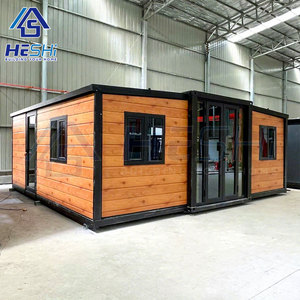
Bi-Fold Engineering
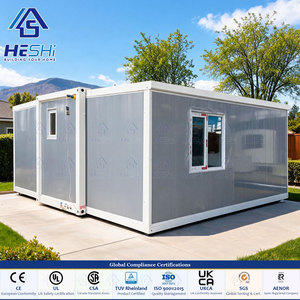
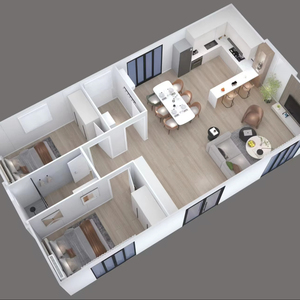
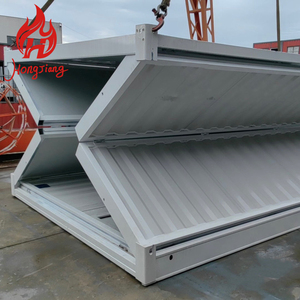
Direct Sale 20Ft 40Ft Container Expandable Prefabricated House With Kitchen Price Prefab Luxury Mobile Home Casas Prefabricadas
37m² / 74m²
Turnkey MEP
Engineered with heavy-gauge galvanised steel chassis, high-density PIR insulation, and pre-integrated mechanical, electrical, and plumbing (MEP) systems ready for immediate deployment across Turkey's diverse geography.
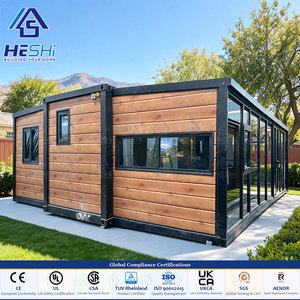
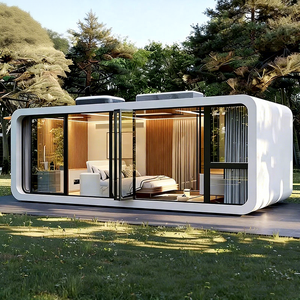
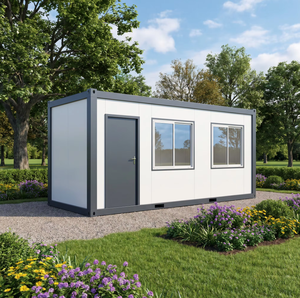
Combining mega-scale Chinese metallurgical capacity with precision European-grade architectural detailing, engineered specifically for Anatolian seismic and Mediterranean micro-climatic requirements.
Every tiny container chassis uses high-tensile Q235B/Q355B cold-formed structural steel framing. Fully integrated perimeter weldments dissipate lateral shear forces, surpassing the strictest criteria of the Turkish Seismic Code (TBDY 2018) for peak ground accelerations up to 0.4g.
By eliminating domestic intermediary markups and utilizing direct steel mill allocations in China, B2B procurement costs drop 32% to 45% compared to Turkish local modular builders, while simultaneously delivering superior polyurethane core insulation and anodized aluminum fenestration.
Pre-installed wiring runs through flame-retardant corrugated conduits utilizing European standard 220V-240V / 50Hz architectures. Complete cross-linked polyethylene (PEX) plumbing conforms directly with Turkish Standards Institution (TSE) guidelines for instant site tie-ins.
From the arid, wind-swept plateaus of Central Anatolia to the humid, saline breezes of the Aegean coastline, our container units are calibrated for regional demands.
Regions: Muğla, Antalya, Bodrum, Kaş, Çeşme.
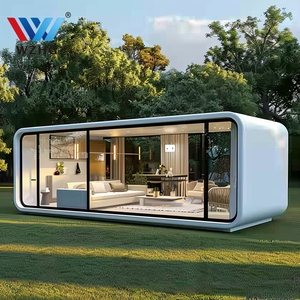
Rapidly expanding boutique glamping developments and luxury boutique retreats require zero-impact construction. Our mobile futuristic capsule houses and double-wing expandable units allow hotel operators to circumvent restrictive coastal zoning bans on permanent concrete foundations, offering thermal double-glazed Low-E glass that cuts cooling loads under 40°C summer conditions.
Regions: Kahramanmaraş, Hatay, Gaziantep, Adıyaman, Malatya.
High-velocity emergency replacement housing demands unyielding durability. Our 20ft flat-pack and folding container modules can be unloaded and erected in less than 20 minutes per module. Featuring non-combustible Class A rockwool and PIR cores, these units provide dignified, durable, and seismically immune domestic environments for extended recovery phases.
Regions: Bursa, Tekirdağ, Çanakkale, Sakarya, Yalova.
With escalating real estate valuations across Istanbul's perimeter, private landholders are increasingly converting agricultural plots (Tarla) into sustainable, off-grid micro-estates. Our 40ft high-cube expandable layouts function as turn-key secondary accessory dwelling units (ADU) featuring custom wood-grain exterior cladding that blends with local architectural aesthetics.
A deep dive into regulatory shifts, institutional investments, and consumer demographics shaping off-site container construction demand throughout Turkey.
Stricter enforcement of Turkey's Construction Law No. 3194 has halted unpermitted reinforced concrete projects on non-zoned agricultural land. Prefabricated tiny container structures with mobile footprints bypass traditional permitting roadblocks, fueling institutional B2B procurement across Aegean municipalities.
Under Turkish Lira volatility, commercial investors are pivoting to modular container assets. These transportable steel structures can be capitalized as movable commercial property, leased on international glamping portals (Airbnb, Vrbo), and liquidated or relocated with minimal friction.
The Middle Corridor initiative has dramatically enhanced maritime routing between Chinese export terminals (Ningbo, Qingdao, Shanghai) and Turkish ports (Ambarlı, Mersin, Gemlik). Realized freight lead times of under 22 days make China-based mass fabrication faster than traditional domestic on-site build timelines.
Turkey’s national building thermal standard (TS 825) mandates strict heat retention coefficients. Chinese factories now embed 100mm high-density cyclopentane-blown polyisocyanurate (PIR) cores, providing U-values below 0.22 W/m²K, which eliminates moisture condensation along the Black Sea coastline.
| Performance Parameter | China Factory Export Model | Turkish Domestic Modular Units | Traditional Reinforced Concrete (Betonarme) |
|---|---|---|---|
| Seismic Acceleration Load | Tested to 0.45g (High Ductility Steel Core) | Variable (Standard C-Stud Profile) | Rigid mass; prone to structural shear cracking |
| Thermal Core Insulation | Continuous 75-100mm PIR / Rockwool sandwich (Class A) | 50mm EPS / Expanded Polystyrene | External brick + plaster (Thermal bridging prevalent) |
| Fabrication & Setup Speed | 15-day factory build; 2-hour field expansion | 3-4 weeks manual site fabrication | 6 to 14 months minimum curing & fit-out |
| Capital Cost Index (USD/m²) | $220 – $380 / m² Turnkey | $450 – $650 / m² Semi-Turnkey | $750 – $1,200 / m² Base Structure Only |
| Asset Portability | 100% Relocatable via Standard Low-Bed Trailer | Partially Demountable (High labor requirement) | Immovable / Permanent Land Tied Asset |
Operating under strict ISO 9001 and CE certifications, we eliminate sub-tier contractor variance through 100% in-house production lines.
Container base frames, perimeter pillars, and roof stringers are precision-cut on 20,000-watt fiber laser centers. Automated multi-axis robotic welders ensure 100% deep penetration welding, preventing rust penetration under high humidity.
Addressing coastal corrosion across Mediterranean ports, all primary structural steel receives high-pressure shot blasting to Sa 2.5 purity, followed by zinc-rich epoxy primers and a heavy polyurethane topcoat delivering 25+ years of exterior durability.
Every bathroom pod, custom kitchen cabinetry set, and electrical distribution network is installed and dry-tested within our indoor factory. Units undergo rigorous 24-hour hurricane-grade artificial water deluge testing prior to packaging.
Comprehensive regulatory, customs, logistics, and engineering guidance for seamless importation into Turkey.
Connect directly with our senior factory structural engineering and export logistics team. We provide complete technical specifications, CAD layout customization, and container freight calculations within 24 hours.