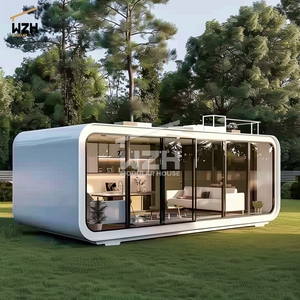
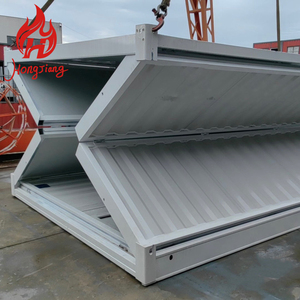
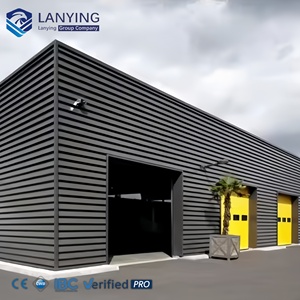
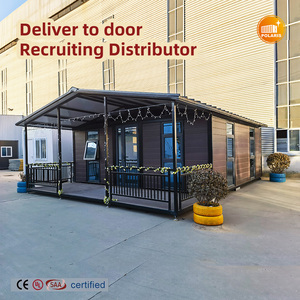
Precision-tested Corten steel structures, off-site pre-plumbed mobile cabins, and ISO-compliant shipping containers ready for industrial procurement and international deployment.
Strategic B2B procurement requires an in-depth understanding of atmospheric corrosion resistance, structural deflection limits, and the economic life-cycle of maritime transport assets.
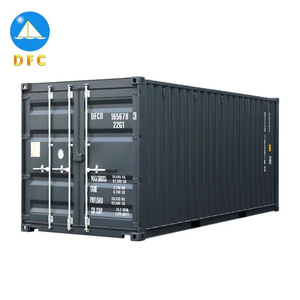
Global logistics, infrastructure, and commercial property developers face acute challenges when sourcing decommissioned intermodal containers. As China remains the epicenter of world maritime container manufacturing and coastal intermodal consolidation, the secondary market for certified used shipping containers has evolved from basic ad-hoc equipment trading into a rigorous, engineering-driven prefabrication ecosystem. A maritime container is not merely an empty steel crate; it is an intensely engineered pressure vessel designed under ISO 1496-1 specifications to withstand up to 192,000 kilograms of superimposed gross weight across eight-tier ocean vessel stacks.
When selecting a manufacturing and export partner in China, understanding the chemical and metallurgical superiority of standard shipping containers is paramount. Authentic intermodal containers are forged exclusively from SPA-H Corten atmospheric corrosion-resistant steel (JIS G3125 standard). The micro-alloyed chemical profile—incorporating regulated percentages of copper, chromium, nickel, and phosphorus—initiates a stable, dense patina layer upon contact with atmospheric humidity. This passivating oxide film virtually arrests progressive oxidation, eliminating the rapid internal rotting common to commercial mild carbon steel structures. When repurposed by an expert factory-direct modular engineering manufacturer, these structural hulls provide an operational lifespan exceeding 35 to 50 years with nominal surface maintenance.
| Grading Metric | Structural Tolerances (IICL-6 / CW) | Surface Oxidation Limits | Floor Loading (Apitong/Keruing) | Export Fit-for-Purpose Scope |
|---|---|---|---|---|
| One-Trip / As-New | Zero deflection on corner posts; door seal zero gap | < 0.5% superficial transit scuffs only | Full 7,260 kg test axle load intact | High-end Architectural Residences, Luxury Villas, Mobile Clinics |
| IICL-6 Certified | Dent depths < 20mm on corrugation; < 10mm post twist | Superficial patina; 100% zinc-rich re-primed | Verified no delamination or chemical spill | Multi-story Modular Housing, Remote Mining Camps, Telecom Pods |
| Cargo Worthy (CW) | Meets CSC valid criteria; no through-hole fractures | Surface rust on welded seams, sound substrate | Sound understructure crossmembers (C-channels) | Overseas Freight Transport (SOC), Heavy On-site Storage, Workshops |
| Wind & Water Tight (WWT) | May have expired CSC plate; structurally wind/rain secure | Patinated exterior surfaces; minor localized pits | Usable deck; repairs applied on compromised joints | Industrial Dry Warehousing, Generator Enclosures, Farm Tool Sheds |
Our industrial conversion pipeline bridges the divide between pure maritime logistics and turnkey commercial modular prefabrication. Every used container passing through our export staging facility undergoes a standardized 24-point non-destructive structural audit. We execute laser dimensional alignment checks across all eight ISO 1161 cast steel corner fittings to confirm that torsion deflection stays within sub-millimeter tolerances. Furthermore, prior to interior architectural framing or MEP (mechanical, electrical, plumbing) fit-out, container floors undergo thorough inspection. Original 28mm tropical hardwood (Keruing/Apitong) decking is surveyed for toxic quarantine treatment residues (such as legacy methyl bromide fumigation) and is either remediated with encapsulated vapor-barrier barrier membranes or replaced with food-grade magnesium oxide (MgO) cement boards and structural fiber cement decking.
Operating beyond the scope of traditional trading brokers, we provide integrated architectural design, robotic metal fabrication, certified MEP assembly, and turnkey global shipping under one roof.
We eliminate broker markups and fragmented sub-contracting. Container plasma cutting, reinforcement portal framing, shot-blasting, thermal break insulation, and sanitary fit-outs occur entirely within our monitored factory bays.
Our container conversions are fully engineered to satisfy host country certifications, including the US National Electrical Code (NEC/UL), European CE declarations, UKCA guidelines, and Australian/New Zealand AS/NZS 3000 wiring standards.
We leverage Shipper Owned Container (SOC) methodologies, securing certified CSC plate renewals that enable units to transit oceanic routes as regular freight. This drastically decreases repositioning overhead and completely avoids demurrage penalties.
From single 20ft off-grid backyard studios to expansive 500-unit workforce housing villages, our production plant manages high-volume rollouts without sacrificing interior millwork tolerances or exterior weather-tight seals.
We overcome condensation risk using computer-modeled dew-point calculations. We specify continuous closed-cell polyurethane spray foam (2.0 lb/cu.ft) and polyisocyanurate panels, ensuring zero thermal bridging and preventing internal interstitial rusting.
Off-site fabrication decouples building production from adverse on-site weather conditions. Buyers achieve up to 50% accelerated occupancy timelines and 30–40% capital expenditure reductions compared to conventional masonry or stick framing.
How progressive institutional developers, government bodies, and international buyers are mitigating supply chain risks and leveraging next-generation modular containerized assets.
Repurposing a 40-foot used high-cube container diverts approximately 3,800 to 4,200 kilograms of structural steel from energy-intensive blast furnace recycling. As international green building rating systems (LEED v4.1, BREEAM, and Green Star) allocate increased weighting to circular economy materials, containerized structural frames provide immediate carbon offset credits for commercial ESG reports.
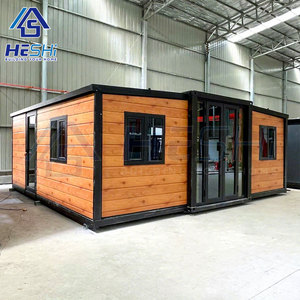
The market is rapidly moving past simple single-box conversions. Contemporary modular developments combine the rigid corner-casting strength of ISO Corten frames with cold-formed light-gauge steel trusses and expandable volumetric wings. This hybrid methodology unlocks expansive open-concept living footprints exceeding 75 square meters while maintaining standard shipping transport geometries.
State-of-the-art procurement now requires complete Building Information Modeling (BIM Level 2) integration. Factory builds utilize 3D point-cloud LiDAR scans of decommissioned container frames to identify structural deflections before laser-cutting MEP chases. Buyers review fully coordinated virtual digital twins, eliminating costly clashes prior to ocean transit.
Remote commercial deployments—from mining operations in Western Australia to eco-tourism resorts across the Caribbean—demand container modules equipped with factory-integrated microgrids. Standardised configurations now integrate bifacial monocrystalline solar arrays, LiFePO4 battery storage bays, atmospheric water generators, and self-contained aerobic digestion waste processors.
Municipal planning authorities worldwide are harmonizing modular construction frameworks (such as Appendix U of the International Building Code in the United States). Forward-thinking exporters in China are preemptively engineering structural modifications to satisfy strict seismic, high-velocity hurricane zone (HVHZ), and wildland-urban interface (WUI) fire-resistance thresholds.
Uncertain ocean freight spot markets have caused commercial developers to favor Shipper Owned Container (SOC) logistics over Carrier Owned Container (COC) leases. By purchasing modified used containers configured to pack cargo internally during transit, developers turn shipping assets into permanent revenue-generating site facilities, recovering up to 80% of logistics capital.
Detailed technical answers addressing custom duty classifications, CSC recertification, toxic residue abatement, structural load ratings, and foundation interfaces.
IICL-6 (Institute of International Container Lessors) represents the strictest commercial standard in used containers, demanding minimal deflection on side corrugations, pristine door gaskets, and structurally perfect corner posts suitable for multi-tier stacking. Cargo Worthy (CW) guarantees structural integrity and compliance with the International Convention for Safe Containers (CSC) for immediate marine transport, though minor exterior aesthetic pitting may exist. Wind and Water Tight (WWT) ensures a weatherproof interior envelope for secure storage, but may have expired CSC certification requiring inspection before maritime transit.
Original marine container floors are fabricated using durable tropical timber (Keruing or Apitong) pressure-treated with pesticides like chlorpyrifos or dieldrin to meet Australian quarantine (DAFF/AQIS) rules. For all residential, educational, or commercial conversions, our facility follows strict remediation protocols. We perform chemical strip tests and either install an epoxy-based vapor barrier underlayment with high-density fiber cement substrate or completely replace the wooden floor with hot-dip galvanized steel subflooring and non-combustible magnesium oxide (MgO) boards.
When side corrugation panels are removed to fit windows, doors, or wide-span openings, the container loses significant structural shear capacity. Our structural engineering department counteracts this by welding cold-formed structural steel rectangular hollow sections (RHS) and heavy-gauge C-channel header frames along all portal perimeters. This re-establishes load distribution down to the corner posts and ISO 1161 corner castings, allowing fully modified units to be stacked up to three stories high when tied down using standardized twist-lock bridge fittings.
Classification depends heavily on the level of modification. Empty, unmodified used ISO shipping containers are cleared under HS Code 8609.00 ("Containers specially designed and equipped for carriage by one or more modes of transport"). Once a container undergoes architectural outfitting, insulation, and electrical MEP installation as a habitable unit or commercial space, it is properly cleared under HS Code 9406.90 ("Prefabricated Buildings of Steel"). Our export compliance department provides exact bills of materials and certificates of origin to streamline import tariffs.
Shipping container steel possesses high thermal conductivity, making uninsulated walls susceptible to condensation ("container sweat") whenever internal temperatures drop below the dew point. We prevent this by applying seamless closed-cell spray polyurethane foam (SPF) directly against the sandblasted Corten corrugations. This continuous impermeable barrier seals every air gap, preventing warm indoor air from reaching cold exterior steel, eliminating mold generation, and insulating up to R-32 thermal resistance.
Because the entirety of a container's structural dead and live load is transferred vertically through its four corner posts, complex continuous perimeter foundations are often unnecessary. Depending on localized soil bearing capacities and geotechnical surveys, projects can utilize concrete pier blocks, helical ground screws, or engineered reinforced strip footings placed under the ISO 1161 corner castings. Embedded weld plates or anchor bolts are cast into the foundation heads to secure the container frame against uplift from seismic and hurricane wind shear forces.
Speak directly with our engineering and logistics specialists. We calculate precise load analyses, provide stamped architectural schematics, manage CSC plate certifications, and deliver direct to your destination port or construction site.