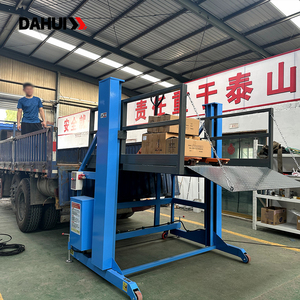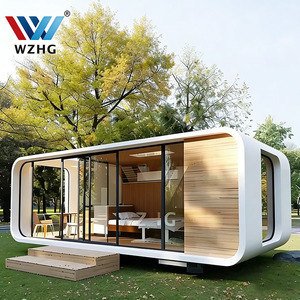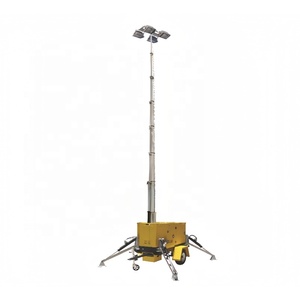
Direct from our manufacturing floor: heavy-gauge shipping containers, pre-fitted modular accommodation hubs, specialized acoustic pods, and commercial loading infrastructure designed to eliminate middlemen.
From single ISO dry freight boxes to complex multi-story structural conversions, our unified fabrication platform delivers industrial-grade dependability.
In the modern international supply chain, procurement directors, civil engineering managers, and real estate developers encounter severe friction when balancing structural safety against competitive lead times. As an authoritative manufacturer and global exporter, our operations are rooted in full vertical integration: from raw Corten steel profiling and anti-corrosive coating application to comprehensive mechanical, electrical, and plumbing (MEP) factory fitting. Unlike intermediaries and trading desks, our facilities manage structural modification, load-bearing verification, and climate containment under one roof.
Our structural designs are engineered exclusively with high-tensile SPA-H atmospheric corrosion-resistant Corten steel. This specialized metallurgy forms a continuous, dense passivating oxide patina when exposed to maritime environments, yielding three to four times the atmospheric corrosion resistance of ordinary carbon steel (Q235/A36). Whether units endure North Atlantic maritime transport or remote, high-salinity coastal installations, structural resilience and long-term resale equity remain intact.
We eliminate broker fragmentation. Structural design, ISO-compliant laser profiling, MEP installations, architectural finishes, and factory testing occur in a unified manufacturing workflow.
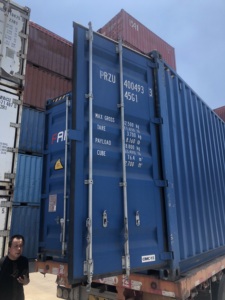
Every dry container and structural conversion is assessed against rigorous CSC (Convention for Safe Containers) stacking standards, supporting 9-high fully loaded ocean-stack conditions up to 192,000 kg.
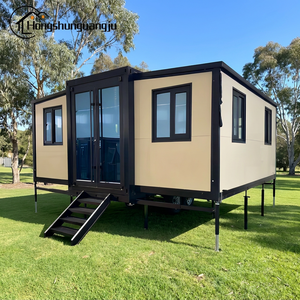
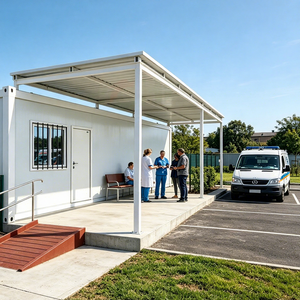
Commercial accommodations, mobile clinics, and remote workforce mining modules leave our staging bays pre-wired, pre-plumbed, insulated, and pre-commissioned for immediate crane positioning.
Detailed dimensional metrics, material formulations, and logistical load ratings for technical evaluation.
| Container Classification | External Dimensions (L × W × H) | Internal Volume | Max Gross Mass (Payload) | Metallurgical Construction |
|---|---|---|---|---|
| 10ft Multi-Purpose Utility | 2,991 × 2,438 × 2,591 mm | 15.8 m³ | 10,160 kg | SPA-H Corten Steel / Marine Plywood |
| 20ft Standard Dry ISO | 6,058 × 2,438 × 2,591 mm | 33.2 m³ | 30,480 kg | SPA-H Corrugated Panels (2.0mm/1.6mm) |
| 20ft High-Cube Modular | 6,058 × 2,438 × 2,896 mm | 37.4 m³ | 30,480 kg | High-Tensile Corner Posts (6.0mm Corten) |
| 40ft Standard ISO Intermodal | 12,192 × 2,438 × 2,591 mm | 67.7 m³ | 32,500 kg | Cross-Members: C-Channel High Tensile |
| 40ft High-Cube Converted Unit | 12,192 × 2,438 × 2,896 mm | 76.4 m³ | 32,500 kg | Multi-Layer Closed-Cell PU + Steel Studs |
Anticipate market shifts, decarbonization imperatives, and automated supply chains across 2025–2030.
The global shipping container and modular steel architecture landscape is undergoing structural transformation. For institutional procurement departments, understanding macro supply shifts is essential to optimize total cost of ownership (TCO) and mitigate regional supply disruptions:
ESG compliance is driving tier-one logistics hubs to favor certified single-trip and cargo-worthy repurposed containers. Retrofitting decommissioned Corten hulls into commercial offices and disaster-relief units saves up to 3,500 kg of embodied greenhouse emissions per 40ft shell compared to virgin steel construction.
Future fleets feature factory-integrated telematics, including digital door-seal verification, shock/impact sensors, internal humidity controls, and real-time GPS geolocation. Autonomous battery architectures integrated into container cross-members allow uninterrupted temperature and perimeter tracking across intermodal paths.
Escalating on-site labor expenses are shifting the civil building envelope toward volumetric modular units. Factory completion levels now exceed 85%, incorporating plumbing runs, pre-wired NEC/CE-certified electrical channels, and thermal envelopes prior to dispatch, shortening site erection cycles by up to 60%.
How modern metallurgy, acoustic isolation, and thermal modeling are redefining container lifespan.
Historically, shipping containers posed thermal bridging challenges and acoustic resonances when repurposed for human occupancy. Today, manufacturing methodologies leverage finite element analysis (FEA) alongside computerized thermal dynamics to resolve structural and environmental limitations.
State-of-the-art modular dwellings and silent pods integrate continuous thermal-break systems. By breaking conductivity across cold-rolled exterior steel ribs using rigid closed-cell polyurethane (PUR/PIR) and aerogel-infused ceramic coatings, our designs achieve verified R-values exceeding R-30. This ensures high energy efficiency in sub-zero mining tundra as well as arid desert extraction environments.
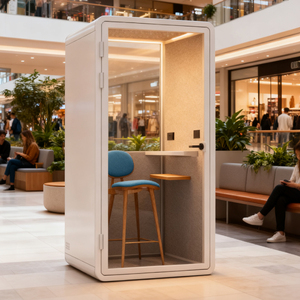
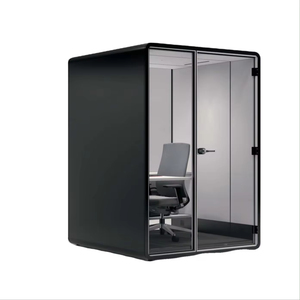
Acoustically, as demonstrated in our dedicated privacy pods and shared office cabins, interior noise-reduction coefficients (NRC) reach up to 0.85. Multi-layered structural composites combine tempered acoustic glass, damped cavity barriers, and perforated sound-absorption baffles, keeping speech privacy within ISO 23351-1 Class A standards.
Clear answers to frequent technical, certification, and logistical questions.
Any modification that compromises corrugation ribs diminishes load-bearing capacity. Our structural engineering department integrates tubular steel perimeter box-headers (typically 100×50×4.0mm RHS) and vertical reinforcement jambs around every aperture, maintaining full CSC roof-load and end-wall deflection standards.
"One-Trip" containers are manufactured, loaded with non-hazardous cargo once from origin, and delivered in pristine structural condition without rust or severe floor wear. "Cargo-Worthy" containers have seen 8 to 12 years of global sea service; they carry minor abrasions and dings but remain wind, water, and CSC certified for stacking and logistics.
Yes. Because we engineer factory-direct, wall panel assemblies, fire-rated insulation, wiring gauges, and sanitary fittings can be customized during production to satisfy NEC, IBC, NFPA, or European CE and BS codes. Complete structural calculation packages and MEP schematics are provided for local permitting.
Beyond natural Corten steel passivity, our marine-grade treatment involves complete dry-ice or grit blasting to Sa 2.5 profile standards, followed by a zinc-rich epoxy primer (30–40µm), a high-build epoxy intermediate barrier (40µm), and a durable polyurethane finish (40µm). This triple-barrier system resists salt-spray degradation past 1,500 hours under ASTM B117 standards.
Because container gross weights are transferred downward exclusively through the four bottom corner castings, simple pier foundations (concrete footings at each corner) are standard. For temporary commercial or mining installations, helical ground screws, heavy timber dunnage, or compacted gravel pads suffice, reducing civil groundworks.
Modified containers that retain their ISO dimensions and corner-casting geometry ship via standard container vessels under a valid CSC inspection certificate. For extended roof profiles or out-of-gauge (OOG) customized builds, we coordinate Flat Rack, Open Top, or dedicated Breakbulk (BB) maritime shipping lanes globally.