Expandable Lab
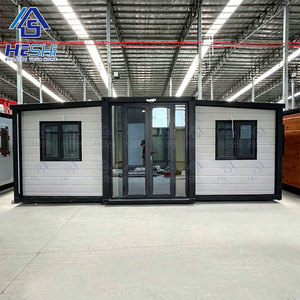
Certified BSL-2/BSL-3 Mobile Containment, Cleanroom Testing Facilities & Rapid Precision Modular Deployments
Engineered to international structural standards, factory-integrated, and fully commissioned for direct multimodal freight delivery to Incheon, Busan, and Pyeongtaek.
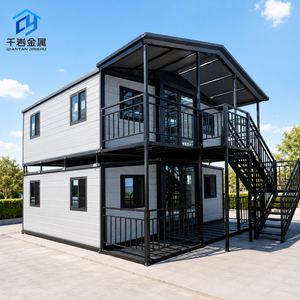
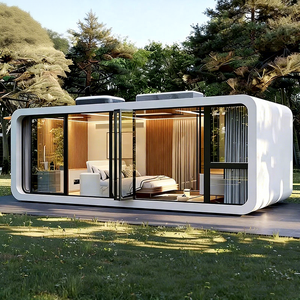
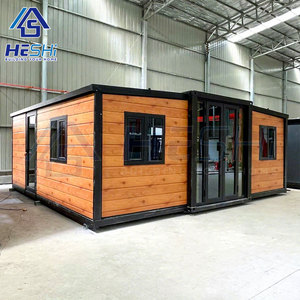
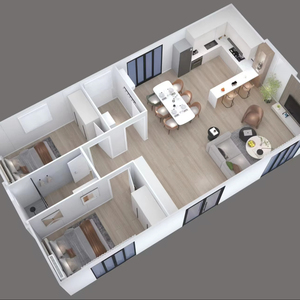
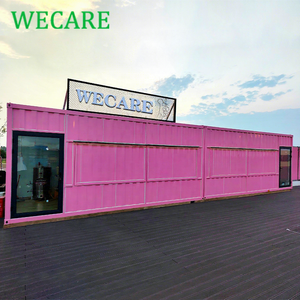
The Republic of Korea continues to consolidate its status as an international epicenter for biopharmaceuticals, clinical toxicology, and advanced semiconductors. However, traditional stick-built or interior masonry retrofit laboratories present structural limitations: prolonged construction downtime, bureaucratic zoning revisions under local District Unit Planning (지구단위계획), and steep land utilization costs in tech clusters like Songdo Biofront, Pangyo Techno Valley, and Daedeok Innopolis. As a premier Container Laboratories Supplier & Exporter serving Korea, our architectural approach converts standard ISO heavy-duty Corten steel shells (20-foot and 40-foot High-Cube variants) into certified, hermetically enclosed laboratory units that bypass rigid civil constraints.
Each container laboratory is factory-commissioned under controlled environmental parameters. Unlike site-assembled structures vulnerable to seasonal thermal fluctuations, our modular pods feature fully welded monolithic steel skeletons, polyurethane spray foam thermal bridges, anti-microbial wall paneling, and hospital-grade seamless vinyl or epoxy floors with coved skirts. These structural standards ensure absolute compliance with the Korean Occupational Safety and Health Agency (KOSHA), Korean Ministry of Food and Drug Safety (MFDS) standards, and international CDC/NIH biosafety guidelines.
| Containment Parameter | 20ft Standard Mobile Unit | 40ft High-Cube Dual-Zone Lab | Modular Expandable Complex |
|---|---|---|---|
| Target Classification | BSL-1 / BSL-2 Analytical Screening | BSL-2 / BSL-3 Bioprocess & Molecular | ISO Cleanroom 5–7 Pilot Production |
| HVAC Differential Air | 12–15 Air Changes/hr (ACH) | 20–30 ACH (-30Pa to -50Pa Gradient) | Fully Recirculating / Once-Through Cascades |
| Exhaust Filtration | 99.97% DOP HEPA Exhaust | Dual Bag-In/Bag-Out (BIBO) Safe Change | Integrated ULPA with Carbon Scrubbing |
| Interior Wall Cladding | Non-combustible Antibacterial Rockwool | Seamless SUS 304 or Phenolic Resin Board | PVDF Coated GMP Modular Wall Panels |
| Electrical Standard | 220V 60Hz Korean Standard | 380V 3-Phase 60Hz Industrial | Dual Redundant UPS & Generator Transfer |
| Transport Compatibility | ISO Flatbed & Ocean CSC Intermodal | Standard High-Cube Logistics Trailer | Specialized Hydraulic Skeletal Chassis |
High-integrity containment units engineered to satisfy specific geographical, environmental, and regulatory conditions from Incheon Free Economic Zone to regional municipal watersheds.
For CMO/CDMO facilities in the Incheon Free Economic Zone (IFEZ), our prefabricated container laboratories serve as validation annexes, batch sterility test cells, and pilot formulation laboratories. They operate entirely independent of main plant footprints, avoiding validation re-certification disruptions of the primary building envelope.
Korea's massive memory and foundry operations generate constant demand for on-site high-purity chemical testing, gas analysis, and slurry purity evaluation. Outfitted with Class 100/1000 laminar flow hoods and vibration-damped structural pedestals, these units isolate sensitive spectrometry assays from fab floor mechanical vibrations.
Targeted for deployment across Gangwon, Jeolla, and Gyeongsang provinces to monitor avian influenza, African Swine Fever (ASF), and aquatic pathogen transmissions. Equipped with negative-pressure airlocks, pass-through autoclaves, and closed waste effluent tanks, technicians conduct diagnostic field assays safely without viral escape risks.
Key technological shifts steering procurement strategies across South Korea's institutional research and private corporate research parks.
South Korea’s Chemical Control Act (화학물질관리법) mandates rigid secondary containment, automated toxic gas shutoff solenoids, and explosion-proof (Ex-d) lighting fixtures in chemical handling areas. Our export units arrive fully pre-piped and pre-wired to integrate seamlessly with standard Korean municipal fire safety and hazard reporting interfaces.
Korean laboratories are heavily automated. Modular facilities deployed in Pangyo and Daedeok demand BACnet/Modbus IoT telemetric suites that stream real-time differential pressure, VOC concentrations, laminar flow velocity, and thermal metrics directly to facility supervisors' centralized supervisory control systems (SCADA).
With corporate ESG commitments sweeping major Korean conglomerates (Chaebols), containerized testing facilities represent zero-waste civil construction. Because the entire structure can be disassembled, hoisted, and re-transported to secondary sites or test plants, capital equipment retains asset flexibility and depreciation advantages.
Rooted in heavy-duty structural manufacturing, our engineering pedigree bridges structural steel resilience with high-grade pharmaceutical cleanroom engineering. We are not an import broker or uncertified fabricator.
Every single ISO container modification is completed under unified factory roofs. From structural gusseting, sub-floor thermal mitigation, and frame sandblasting to MEP (Mechanical, Electrical, Plumbing) conduit routing and negative-pressure testing, all processes are overseen by in-house quality assurance engineers before units are released for intermodal export.
Clear, direct answers regarding customs clearance, building code compliance, electrical compatibility, and on-site integration in South Korea.
Consult directly with our modular containment engineering team. Submit your architectural requirements, biological safety level specifications, and project timeline for a comprehensive technical evaluation and factory-direct quotation.
Send an Inquiry