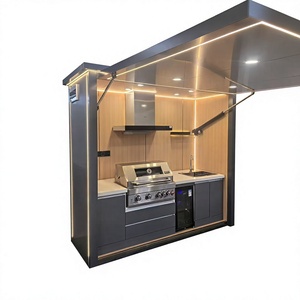
Prefabricated Contemporary Kitchen Container with Steel Structure & Sandwich Panel for RVs Outdoor Use (20FT/40FT Customizable)
Review Specifications
Direct supply line allocations for Northern California procurement officers, logistics freight forwarders, and commercial builders. Standard CSC-plated dry cargo units and precision pre-engineered modules engineered for immediate San Francisco Bay Area transit.
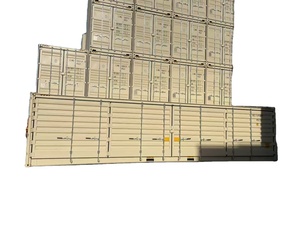
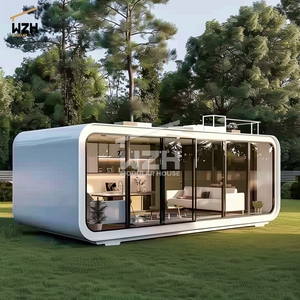
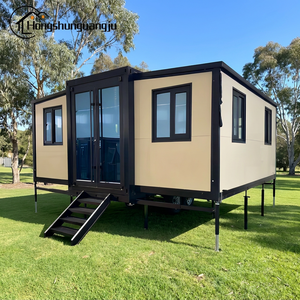
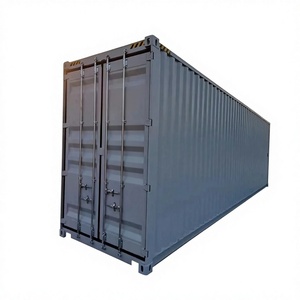
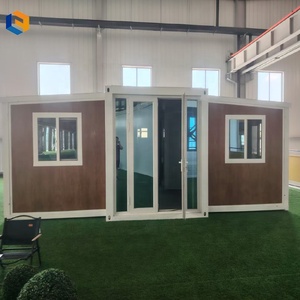
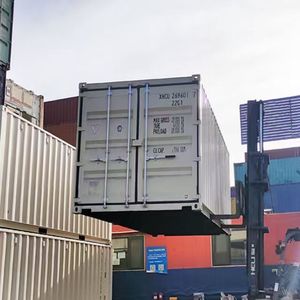
In-depth architectural analysis of dry cargo ocean freight containers deployed throughout the greater San Francisco metropolitan area and transpacific maritime shipping channels.
The procurement of standard intermodal freight equipment across Northern California demands rigorous adherence to international maritime treaties and regional civil engineering statutes. An industrial dry cargo container is not merely an enclosed steel box; it is an engineered, monocoque load-bearing structure fabricated almost entirely from SPA-H Corten atmospheric corrosion-resistant steel. This metallurgical chemistry introduces precise percentages of copper, chromium, and nickel, generating a dense, regenerative oxide passivation layer (patina) upon exposure to ambient marine moisture. For companies operating along the San Francisco Bay—from the maritime salt air adjacent to the Embarcadero to windy terminal yards in Richmond and Oakland—this alloy provides the structural durability needed to resist corrosive degradation without continuous repainting cycles.
Every standardized dry van distributed to our San Francisco export partners is manufactured and tested under strict compliance with ISO 1496-1:2013 (Series 1 freight containers — Specification and testing). The corner castings, cast from low-alloy steel (SCW 480 equivalent), withstand massive tensile and compressive stresses, permitting vertical stacking up to nine units high when fully loaded to an M.G.M. of 30,480 kg (67,200 lbs). The flooring system features 28mm thick, multi-ply maritime-grade apitong or keruing hardwood plywood, pressure-impregnated with phenolic resins and biological preservation agents conforming to the Australian Quarantine and Inspection Service (AQIS) standards for pest exclusion during ocean transport.
| Dimensional Parameter | 20ft Standard Dry Van (20GP) | 40ft Standard Dry Van (40GP) | 40ft High Cube Dry Van (40HQ) | 40ft Open Side Container |
|---|---|---|---|---|
| External Length / Width / Height | 19′ 10.5″ × 8′ 0″ × 8′ 6″ | 40′ 0″ × 8′ 0″ × 8′ 6″ | 40′ 0″ × 8′ 0″ × 9′ 6″ | 40′ 0″ × 8′ 0″ × 9′ 6″ |
| Internal Clear Dimensions | 19′ 4″ × 7′ 8.5″ × 7′ 10″ | 39′ 5″ × 7′ 8.5″ × 7′ 10″ | 39′ 5″ × 7′ 8.5″ × 8′ 10″ | 39′ 2″ × 7′ 6″ × 8′ 6″ |
| Door Opening (W × H) | 7′ 8″ × 7′ 5.75″ | 7′ 8″ × 7′ 5.75″ | 7′ 8″ × 8′ 5.75″ | Continuous Lateral Bi-Fold Aperture |
| Tare Weight (Nominal) | 4,916 lbs (2,230 kg) | 8,160 lbs (3,700 kg) | 8,598 lbs (3,900 kg) | 11,460 lbs (5,200 kg) |
| Max Payload Capacity | 62,284 lbs (28,250 kg) | 59,040 lbs (26,780 kg) | 58,602 lbs (26,580 kg) | 55,740 lbs (25,280 kg) |
| Cubic Capacity | 1,172 cu. ft. (33.2 m³) | 2,389 cu. ft. (67.6 m³) | 2,694 cu. ft. (76.3 m³) | 2,540 cu. ft. (71.9 m³) |
| Bay Area Application Suitability | Dense urban site storage, ADU cores | Intermodal rail, agricultural transload | Commercial office builds, multi-tier residential | Forklift loading, oversized industrial robotics |
From the Port of Oakland’s marine terminals to the high-density tech campuses of Silicon Valley, dry cargo containers fulfill hyper-specific logistical and architectural missions across Northern California.
The Port of Oakland serves as the primary ocean export gateway for Northern California’s Central Valley agricultural output and wine regions (Napa, Sonoma, Livermore). Standard 20GP and 40HQ dry cargo containers receive high-density wine pallet transloads, dried fruit, and nut shipments under strict Cargo Worthy (CW) and IICL-5 conditions, preventing humidity intrusion while navigating the intermodal corridor along the I-80/I-880 freeway network.
Biotech hubs in Mission Bay, South San Francisco, and tech engineering facilities across Sunnyvale and Mountain View convert ISO dry cargo shells into secure, EMI-shielded testing chambers, outdoor prototype server enclosures, and robotic hardware testing staging pods. The container’s rigid structural frame provides instant acoustic isolation and equipment security on dynamic R&D campuses.
San Francisco’s stringent seismic performance codes (Seismic Design Category E/F) make ISO container bodies an exceptional structural chassis for fast-track Accessory Dwelling Units (ADUs). Under California Senate Bills 9 and 10, residential infill properties across the Sunset, Richmond, and East Bay districts deploy modified containers for secondary housing, capitalizing on high shear-wall values and factory-level precision.
How regulatory shifts, sustainability imperatives, and coastal land valuations are reshaping demand for dry freight containers across the 9-county Bay Area.
California Air Resources Board (CARB) Advanced Clean Fleets (ACF) regulations require zero-emission drayage operations around the Port of Oakland. Shippers increasingly require regional dry container staging yards outside congestion zones to optimize chassis flips and minimize demurrage penalties.
San Francisco’s Environment Code sets ambitious net-zero operational and embodied carbon targets. Repurposing 8,000-pound Corten steel containers diverts high-embodied-energy raw metals from smelters, reducing construction lifecycle greenhouse gas emissions by up to 38% compared to cast-in-place concrete.
With square-foot real estate values in downtown San Francisco, SOMA, and Berkeley among the highest in North America, businesses employ stackable side-opening dry van containers for multi-level vertical worksite staging, pop-up commercial storefronts, and modular industrial micro-warehouses.
Escalating on-site Bay Area union labor rates and protracted permitting timelines have triggered a massive migration toward off-site fabrication. Factory-finished containerized kitchens, washroom modules, and MEP electrical rooms reduce overall job-site schedule durations by up to 60%.
Combining direct ISO production scale with specialized in-house American structural engineering.
Established in 2015 by builder Robert Wagoner, our organization emerged from real-world construction craftsmanship. We observed firsthand that the traditional construction model in volatile coastal areas like San Francisco creates prolonged delays, weather exposure liabilities, and ballooning subcontractor costs. By anchoring container manufacturing, precision laser cutting, heavy structural modifications, MEP installations, and architectural finishing in our own controlled factory floor, we eliminate third-party broker markups and maintain absolute structural accountability.
"Traditional construction methods in the San Francisco Bay Area are subject to some of the highest labor premiums and strictest municipal codes in the world. Utilizing repurposed, high-strength Corten shipping containers engineered under factory precision completely transforms the timeline and economics for developers and commercial fleets."— Robert Wagoner, Founder & Master Modular Builder
Clear, technical, and regulatory answers for fleet managers, general contractors, and regional freight buyers.
Consult with our structural container specialists on container availability, CSC survey validation, Title 24 modifications, and seamless Bay Area intermodal logistics.
Contact Us