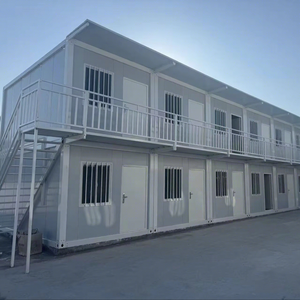
Direct-from-manufacturer volumetric solutions engineered to meet the structural, thermal, and economic demands of Bangladesh's infrastructure and industrial development.
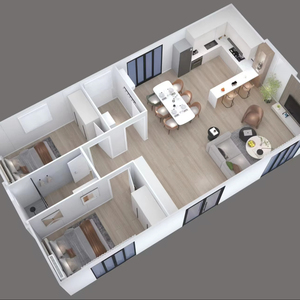
The People's Republic of Bangladesh represents one of the world's fastest-growing frontier manufacturing epicenters, driven by intense industrial diversification across the Ready-Made Garments (RMG), textile processing, shipbuilding, and heavy pharmaceutical sectors. However, this blistering economic growth faces acute spatial, geological, and hydrometeorological challenges. Traditional brick-and-mortar masonry construction within the Bengal Basin is inherently slow, carbon-intensive, and susceptible to severe settlement in low-bearing-capacity alluvial silt. Furthermore, the relentless exposure to deltaic moisture, monsoonal flash-flooding, and coastal cyclonic depressions requires a structural paradigm shift.
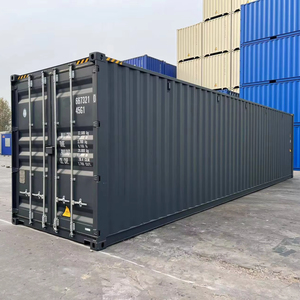
As a Tier-1 Chinese expandable container manufacturer and direct engineering facility, we bridge this infrastructural gap by supplying precision-manufactured, ISO-compliant modular living and commercial systems engineered explicitly for South Asian environmental profiles. Unlike conventional flat-pack cabins or lightweight shed frames, our expandable double-wing containers integrate high-tensile hot-dip galvanized Corten steel frames (Q235B/Q345B), automated dual-damper folding mechanics, and fully factory-installed MEP (Mechanical, Electrical, and Plumbing) infrastructures that unpack on-site within 40 minutes, reducing on-site civil works by over 85%.
Strategic deployment architectures tailored to regional climate demands, special economic zones (BEPZA/BEZA), and rapid infrastructure programs.
Rapid deployment of modular administrative headquarters, site engineer quarters, and executive client-sampling rooms within industrial hubs like Gazipur, Narayanganj, Savar, and Mirsharai. Expandable configurations provide insulated, soundproof acoustic environments shielded from noisy garment machinery floors.
Turnkey worker accommodations, telemetry labs, and command centers deployed along major river-bridge and deep-sea port terminals, including the Padma Rail Link, Matarbari Deep Sea Port, and Karnaphuli Tunnel zones. Designed for repeated dismantling, crane lifting, and relocation without structural fatigue.
Rapid-response medical triage wards, water purification stations, and temporary rehabilitation shelters for disaster-prone coastal districts including Khulna, Bhola, Cox's Bazar, and Patuakhali. Sealed with high-density EPDM marine gaskets that resist tropical downpours and flood inundations.
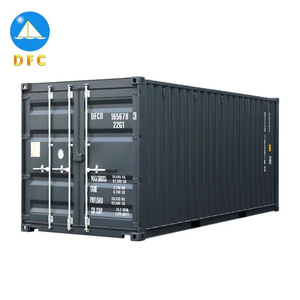
Comprehensive engineering benchmarks for 20ft and 40ft expandable modular systems engineered for oceanic logistics and South Asian installation.
| Engineering Parameter | 20ft Dual-Wing Expandable Model | 40ft Dual-Wing Expandable Model | Compliance & Verification Method |
|---|---|---|---|
| Folded Shipping Dimensions (L×W×H) | 5,900 mm × 2,250 mm × 2,520 mm | 11,800 mm × 2,250 mm × 2,520 mm | Standard ISO Intermodal Dimensions |
| Unfolded Operating Footprint | 5,900 mm × 6,300 mm × 2,520 mm (~37.2 m²) | 11,800 mm × 6,300 mm × 2,520 mm (~74.3 m²) | Deployable in < 45 minutes |
| Structural Frame Steel Grade | Hot-Dip Galvanized Q235B / Corten Weathering Steel | Structural High-Tensile Q345B Steel Tube Chassis | GB/T 1591-2018 / ASTM A588 |
| Thermal Core Wall Insulation | 50mm/75mm Rockwool / PIR Fire-Resistant Core | 75mm High-Density PIR (Polyisocyanurate) Sandwich | Class A / B1 Non-Combustible (EN 13501-1) |
| Cyclonic Wind Resistance Rating | Up to 180 km/h (Beaufort Scale 12) | Up to 210 km/h with Corner Ground Anchors | BNBC 2020 Chapter 6 Wind Load Standard |
| Floor Live Load Bearing Capacity | 2.50 kN/m² (Standard Industrial Rating) | 3.00 kN/m² (Reinforced Marine-Grade Base) | ISO 1496-1 Cargo Floor Stress Testing |
| Coastal Corrosion Protection Coating | Three-Layer Epoxy Zinc-Rich System (180μm) | Marine Fluorocarbon / Polyurethane Topcoat (220μm) | ISO 12944 Corrosivity Category C4 Marine |
| Pre-Engineered MEP Infrastructure | Integrated BS 1363 / BNBC 220V Outlets, Breakers | Multi-Zone DB Board, PEX Plumbing, LED Array | CE Certified, IEC 60364 Electrical Code |
Strategic economic factors accelerating the shift from traditional wet construction to modular containerization across public and private sectors.
With the Bangladesh Economic Zones Authority developing 100 economic zones encompassing over 75,000 acres, multinational industrial concessionaires face stringent deadlines. Modular expandable containers provide turnkey, fully fitted administrative offices and worker dormitories within weeks instead of years.
Traditional concrete structures in southern delta zones like Khulna, Mongla, and Cox's Bazar experience severe rebar corrosion from hyper-saline ground tables. Factory-applied industrial fluorocarbon coatings on our Corten steel frames provide a documented 25+ year design lifespan unaffected by salt mist or monsoon mold.
High bank interest rates in Bangladesh make extended construction cycles financially perilous. By shifting structural fabrication off-site to automated Chinese production lines, commercial developers compress project development timelines by up to 70%, accelerating revenue generation and rental amortization.
Bangladesh's vast network of inland waterways makes barge logistics highly cost-efficient. Our expandable units fold down into standardized ISO container footprints that load directly onto standard container barges and flatbed trucks navigating the Dhaka-Chittagong highway network without special oversized transport permits.
Eliminating middlemen brokers: true direct factory engineering, ISO quality governance, and comprehensive customization capabilities.
Every expandable unit is engineered from raw Corten coil to finished volumetric container in our 45,000 m² automated production facility. Structural welding is certified under AWS D1.1 and EN 1090-2 execution standards, ensuring structural integrity during dynamic crane hoisting.
Specifically for South Asian oceanic shipping, our units incorporate internal desiccants, heat-shrink weatherproofing wraps, and sacrificial zinc-anode packaging that guarantees zero water ingress or oxidation during sea transit through the Bay of Bengal to Chittagong or Mongla ports.
Plumbing lines, sanitary fixtures, LED arrays, and breaker boards are 100% factory pre-wired, pressure-tested, and certified to meet the Bangladesh National Building Code (BNBC) and British Standard BS 7671 prior to sea container packing, leaving zero guesswork for local crews.
Detailed technical answers addressing customs regulations, sea freight logistics, Letter of Credit (LC) procedures, and site preparation.
Our prefabricated expandable container houses are typically classified under HS Code 9406.90.00 (Prefabricated Buildings of Steel) or HS Code 8609.00.00 (Cargo Containers specially designed and equipped for carriage). We provide complete shipping documentation including certified Commercial Invoices, Packing Lists, Certificates of Origin (CO - Form B for Asia-Pacific Trade Agreement / bilateral trade accords), and structural mill test certificates to ensure rapid customs appraisal at Chittagong Custom House and Mongla.
Yes. We routinely work with Tier-1 commercial and state-owned Bangladeshi financial institutions (including Eastern Bank Ltd, BRAC Bank, City Bank, Islami Bank, and Sonali Bank). We accept Irrevocable Documentary Letters of Credit (LC) payable at sight, fully structured to comply with Bangladesh Bank Foreign Exchange Guidelines and international UCP 600 standards.
Our double-wing container houses feature an engineered sloping roof system equipped with secondary drainage channels and heavy-duty UV-stabilized EPDM dual-lip rubber seals. Unlike standard silicon sealing, our mechanical compression joints prevent water pooling even under torrential monsoon conditions (up to 300mm daily rainfall). Internal wall panels utilize hydrophobic Rockwool or PIR cores that prevent moisture absorption and fungal growth.
Due to the monocoque steel frame distribution, our expandable containers do not require deep pile foundations unless multi-stacked. For standard single or two-story installations on typical soft Bengal silt (Dhaka, Narayanganj, Comilla), a simple concrete slab (150mm thick with light mesh) or isolated concrete pad footings at the main corner posts provide superior structural stability and allow post-monsoon leveling adjustments.
Direct ocean freight voyages from Ningbo, Shanghai, or Shenzhen to Chittagong Port (CTG) generally require only 10 to 14 days of water transit. After accounting for container slot booking and customs clearance, typical turnkey procurement cycles from formal factory order confirmation to port arrival are achievable within 25 to 35 calendar days.
All electrical conduits, wiring harnesses, distribution panels, and circuit breakers (MCB/RCD) are factory-configured for Bangladesh's 220V/230V single-phase or 400V three-phase 50Hz electrical grid. We install Type G (British 3-pin standard) or universal multi-standard shuttered sockets, copper earthing terminals, and optional solar inverter integration terminals.
Consult with our structural engineering team regarding architectural drawings, custom MEP layouts, containerized bulk freight rates to Chittagong Port, and direct factory pricing.